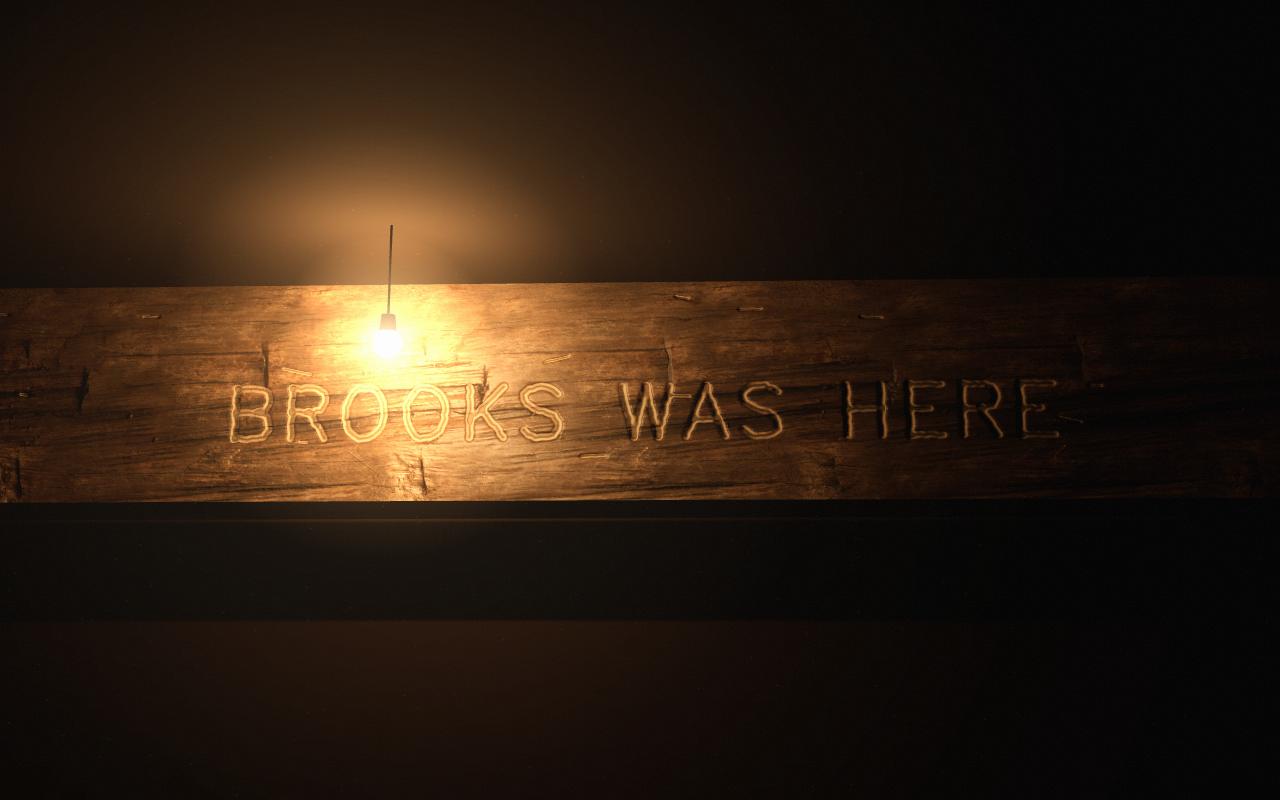
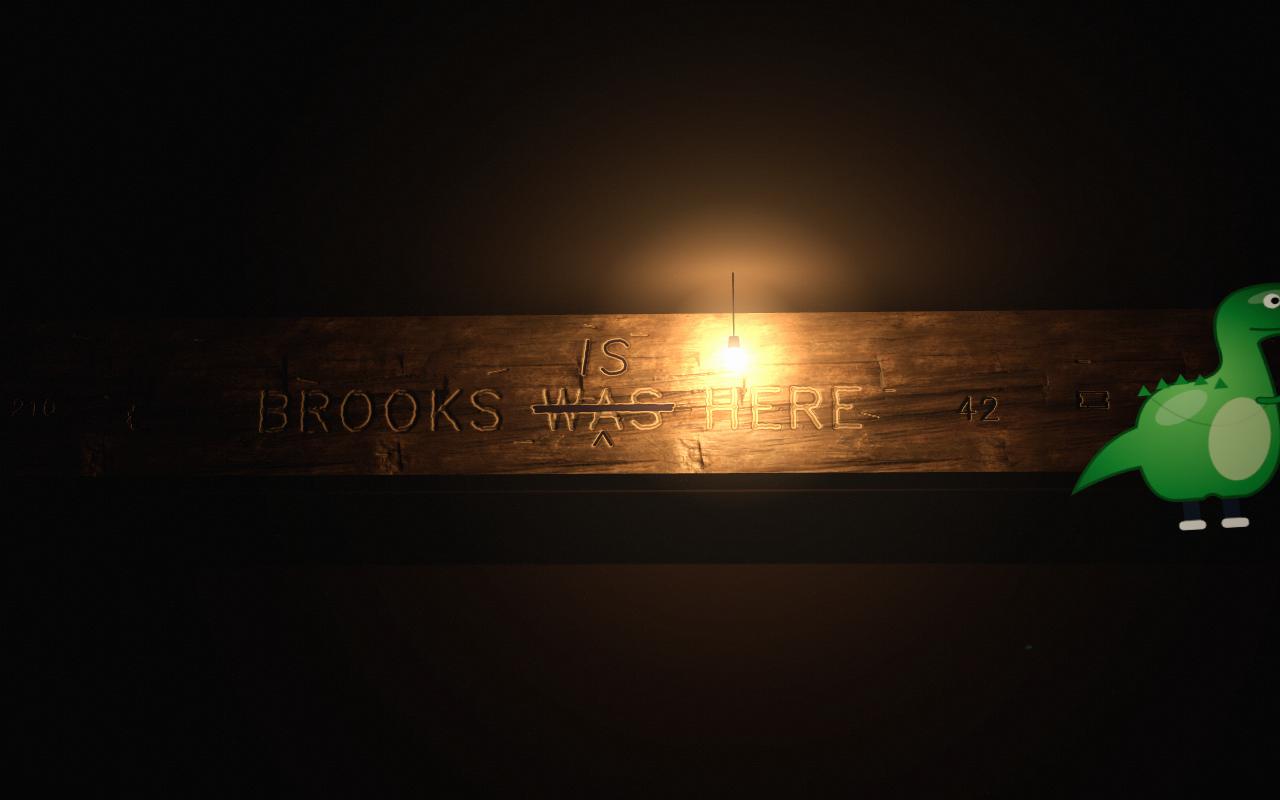
A weathered wooden beam under one bare bulb. Carved into it: BROOKS WAS HERE.
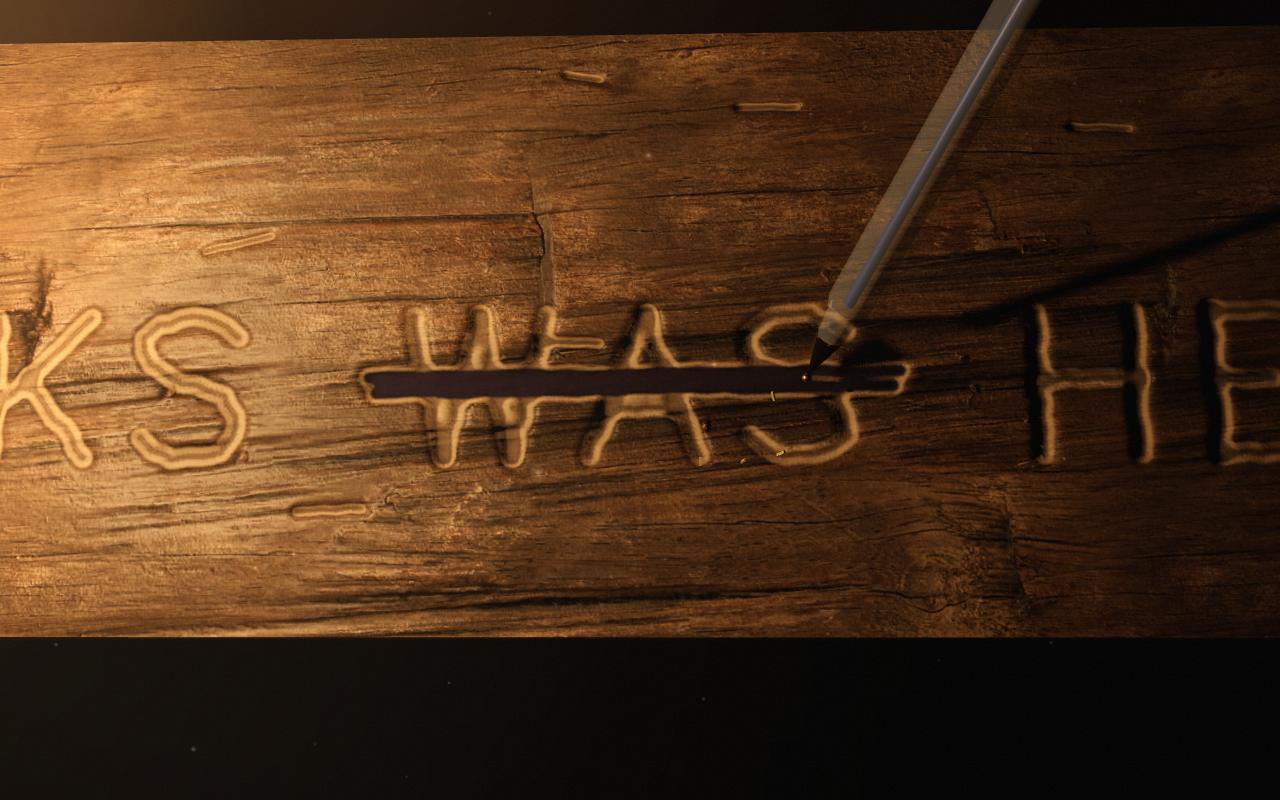
A clear ballpoint pen scores three lines through the word WAS. The word stays legible under the strike.
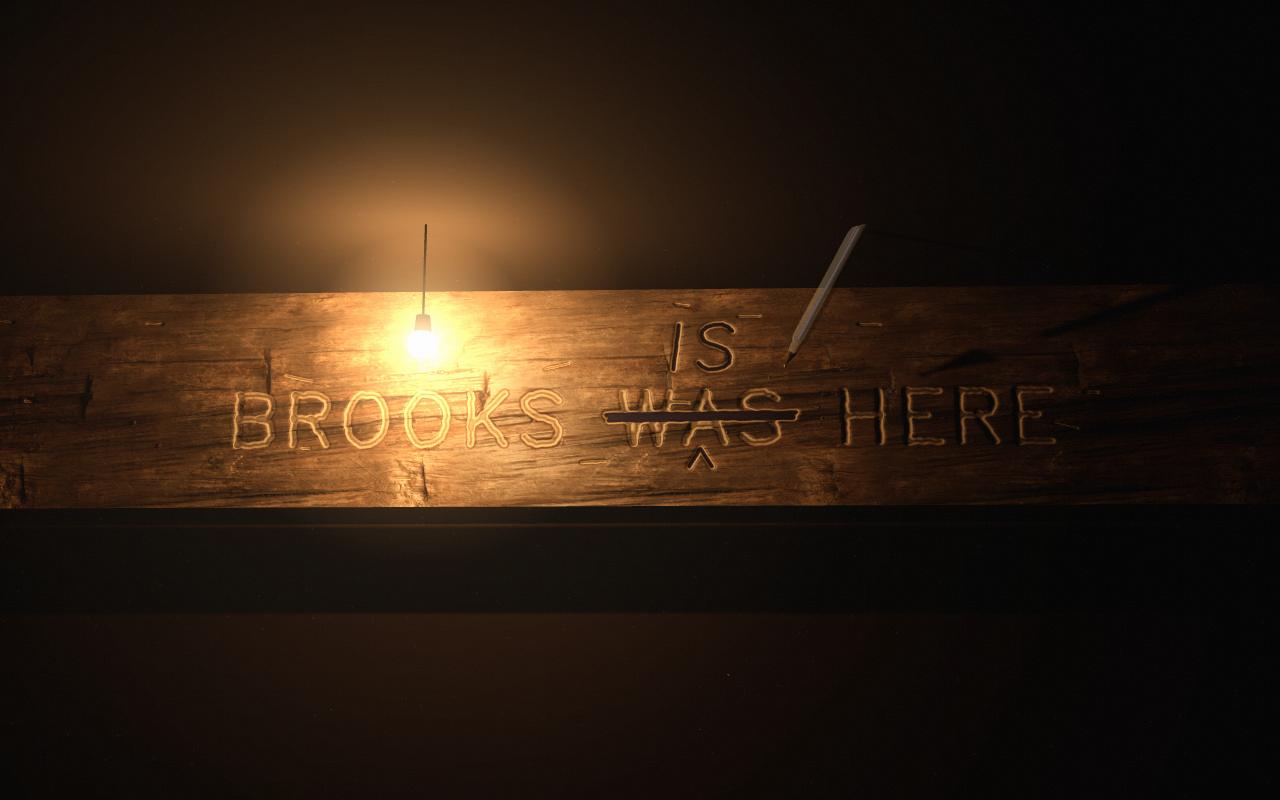
The correction finished: WAS struck through, a proofreader’s caret beneath it, and IS written above in ink. BROOKS IS HERE.
The pen leaves the wood. Its ink runs on down the page as a single line.
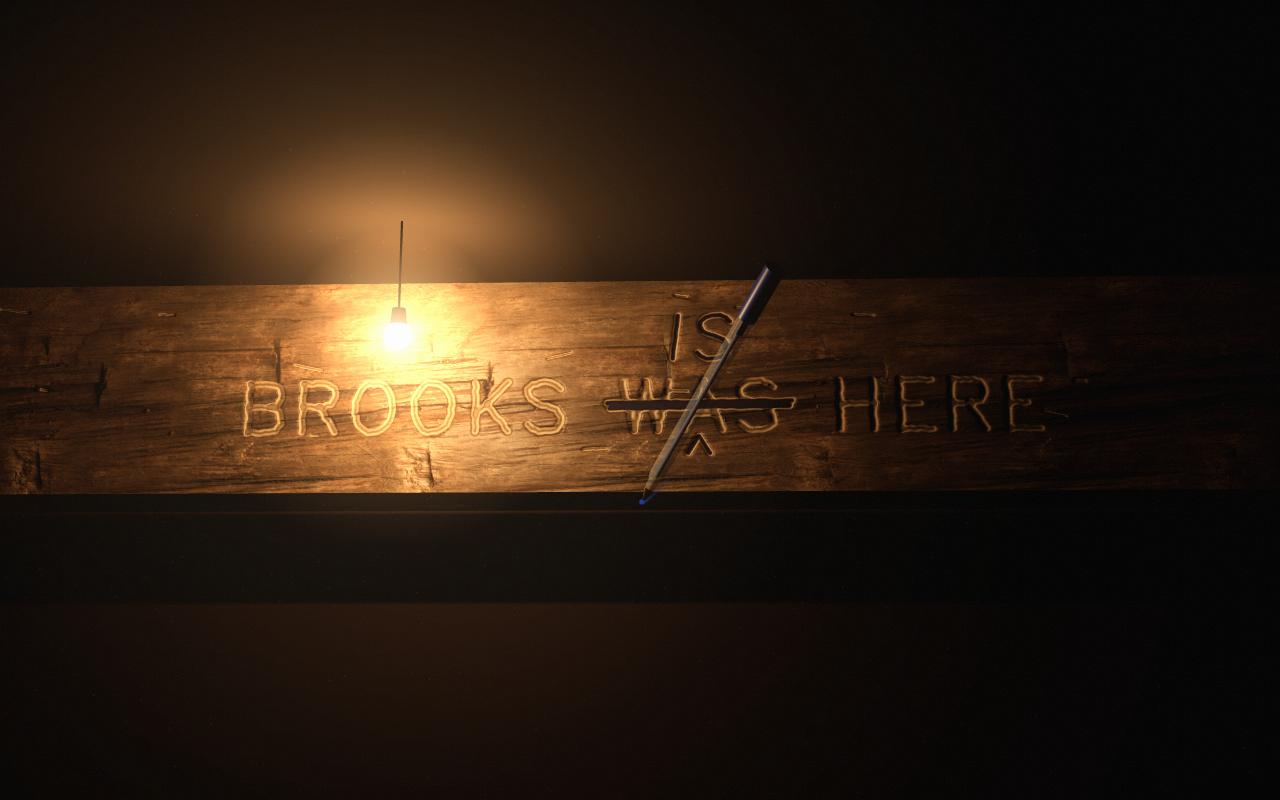
Brooks was is here — the story of Brooks Brown
the thread
A Life in Acts
Brooks Brown
You can never step into the same river twice, said Heraclitus. You can never step into the same river once, said Cratylus. There is no river. There is only what is happening.
The ink pools and spreads into a river of fine blue lines across the paper, then gathers back into one line.
What the Acts Have in Common
People who learn my résumé all at once tend to reach for the same phrase: third act. As if the philosophy and the community and the inflatable dinosaurs were a late-life pivot, a reinvention after the studios and the headsets. It’s a kind narrative. It’s also wrong.
There is no third act because there were never really acts at all — not in the sense of departures. There has been one continuous motion wearing different costumes. Put me in front of a problem that everyone in the room has quietly agreed cannot be solved, and something in me wakes up. I solve it, I make the thing work, and then — this is the part people find strangest — I move on. Not because the work stopped mattering, but because the work was never the point. The solving was the point. The finished thing belongs to everyone else. The problem was mine.
That’s the thread. Everything that follows is just the thread passing through different fabric.
The Boy on Television
I was eighteen years old when my life became something defined by other people.
On the morning of April 20, 1999, a friend of mine told me to go home. Minutes later he and another boy I had grown up with began killing our classmates at Columbine High School. My little brother was inside. Kids I loved died. And before the country had finished counting the dead, the sheriff of Jefferson County went on national television and named me — the friend, therefore the accomplice — as someone about to be arrested. None of it was true. My family had, in fact, spent more than a year before the shooting begging that same department to look at Eric Harris, and been ignored. The police had a choice between admitting that and feeding a teenager to the cameras. They chose the teenager.
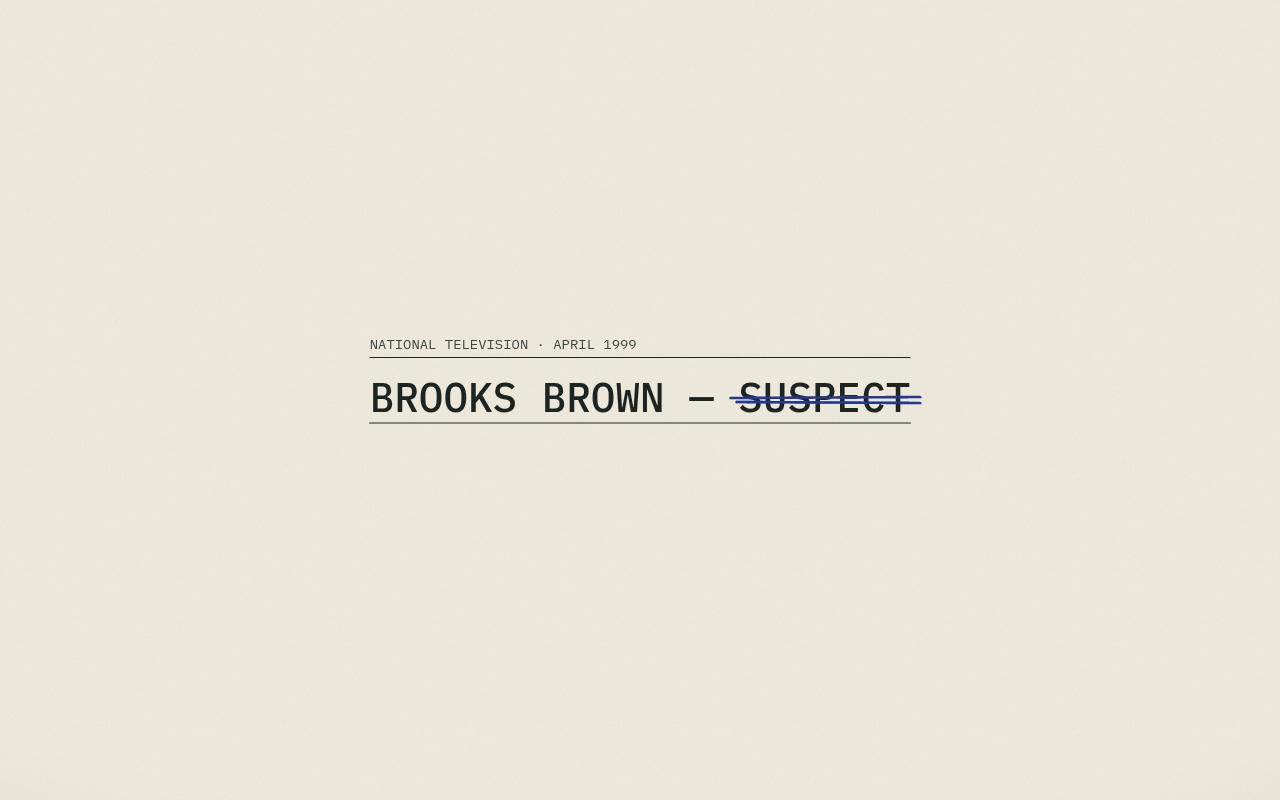
A news caption from April 1999 reading BROOKS BROWN — SUSPECT. The word SUSPECT is struck through in ink.
Here is what I learned at eighteen, the lesson underneath every other lesson of my life: when the story being told about the world is false, the only real response is to build a truer one — and building it is work, not sentiment.
So I worked. Rob Merritt and I wrote No Easy Answers, the book that refused the era’s comfortable scapegoats — the video games, the trench coats, the rock music — and said the harder thing: that this grew from bullying, alienation, and institutions that looked away. I wrote a letter to a documentary filmmaker I’d admired as a kid, a guy named Michael Moore, and told him he should make a film about Columbine. He did. It’s called Bowling for Columbine, I’m in a good chunk of it, some of the footage is mine, and it won the Academy Award. I walked the halls of Congress with gun-safety lobbyists trying to close the gun-show loophole, back when John McCain was in his maverick phase and the thing nearly passed. I gave the talks. I did the interviews. I reviewed books for NPR.
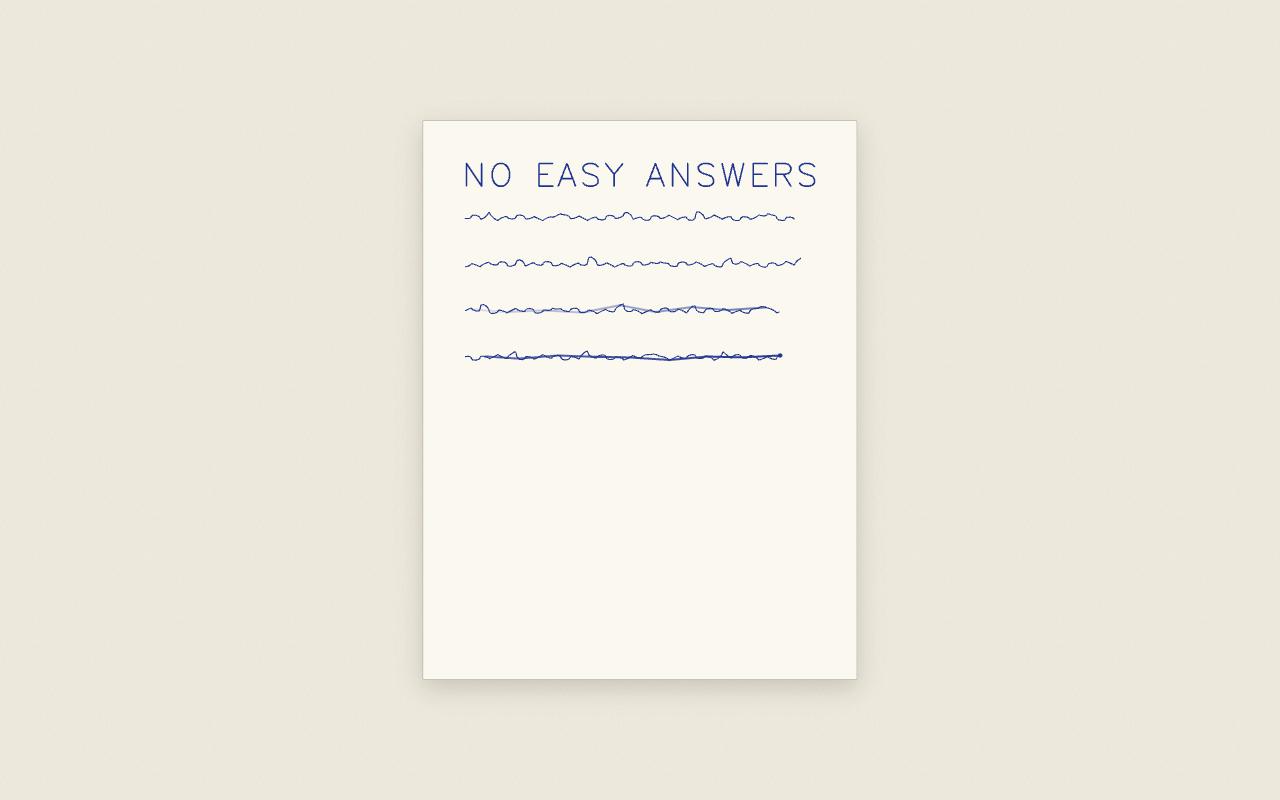
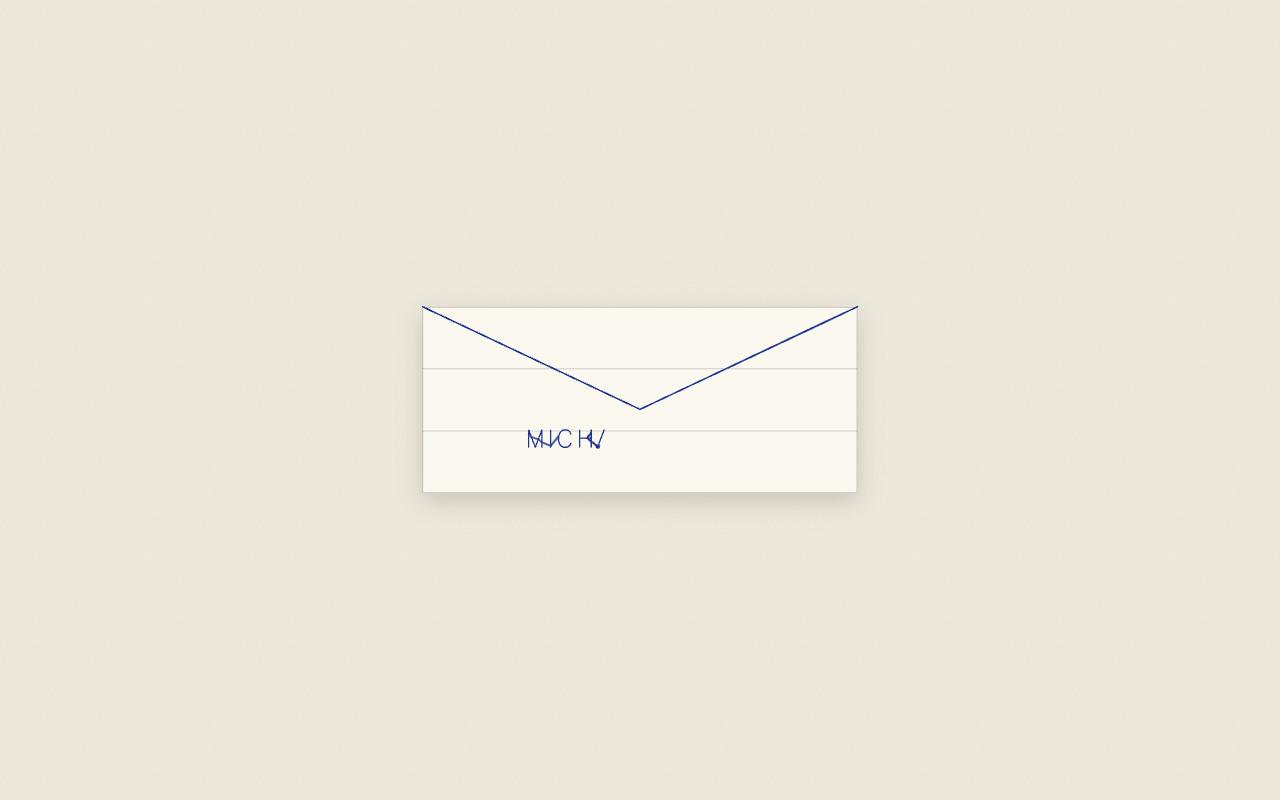
The pen writes a manuscript page titled NO EASY ANSWERS. The page folds into a letter addressed to MICHAEL MOORE. The letter unspools into a strip of film. The frames hold no pictures, only light: grain, a scratch, warm light leaks at their edges.
And then I stopped — because I had solved what I could solve, and the rest was beating my head against a wall that had no intention of moving, and the wall was starting to win. The activism was pushing me toward the same darkness it was meant to fight. So I did the thing I would do again and again for the rest of my life, the thing that looks like abandonment and is actually survival:
I moved on. I decided I wanted to make video games.
A beige 1990s home computer. The view pushes into its screen.
ROI on Fun
My brother and I grew up on one home PC playing The Secret of Monkey Island, and we both decided, in that unserious way children decide things, that we would make games when we grew up. What are the odds that both of us would end up in the same building at LucasArts — him as a sound designer, me running digital — working on the reboot of the actual game that decided it? I got to voice pirates in the Scumm Bar. He got to make it sound right. If you want to know why I say my life has been touched by something, start there.
A pixel-art night: a boy on a wooden dock under the moon, with a verb bar below reading LOOK AT MOON. The ballpoint pen sits in the inventory.
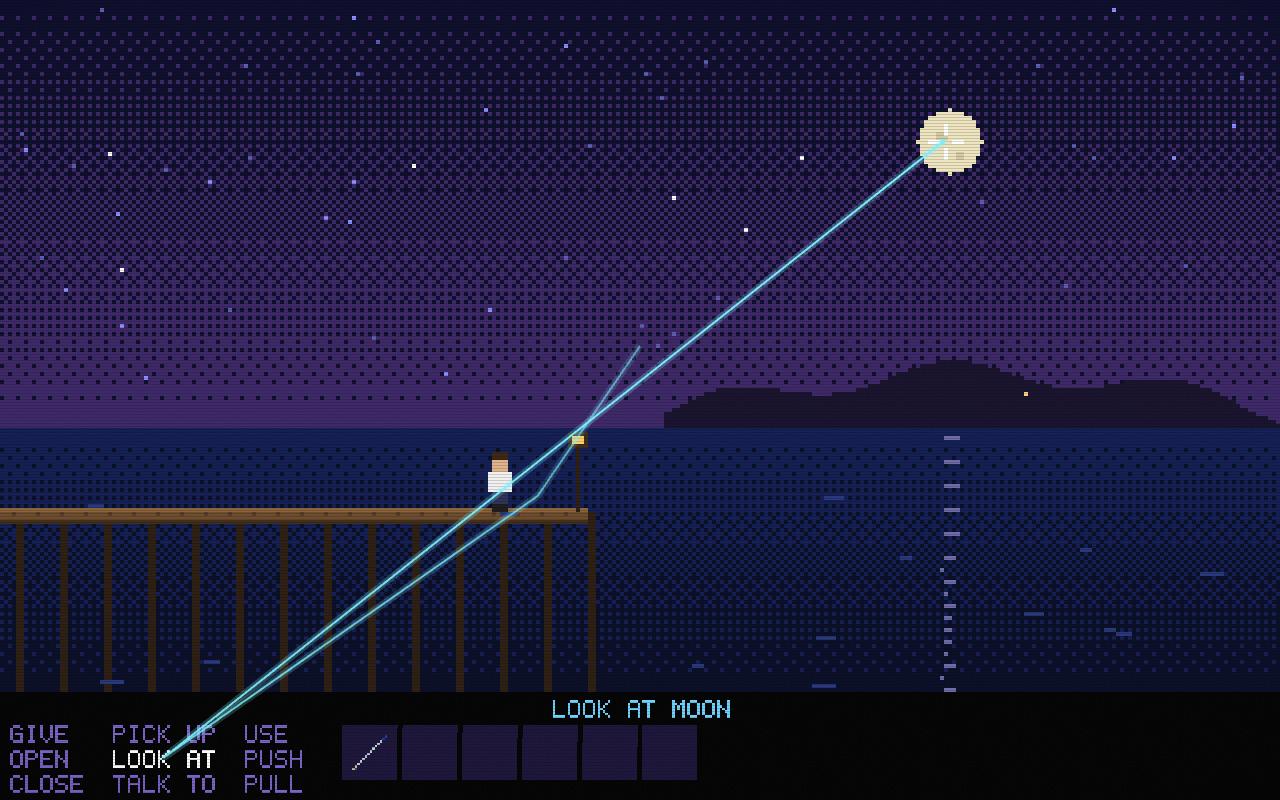
I got into Lucas the only way a college dropout with no pedigree gets in anywhere: sideways. I’d taught Final Cut Pro. I’d coded Drupal for a video-game site for concerned parents. A publicist I’d befriended on my Columbine book turned out to be — by blood — Tim Schafer’s cousin, and over one lunch the man who created the games of my childhood became a friend. Kindness, honestly offered, spiderwebs. I have never once regretted an unanswered email.
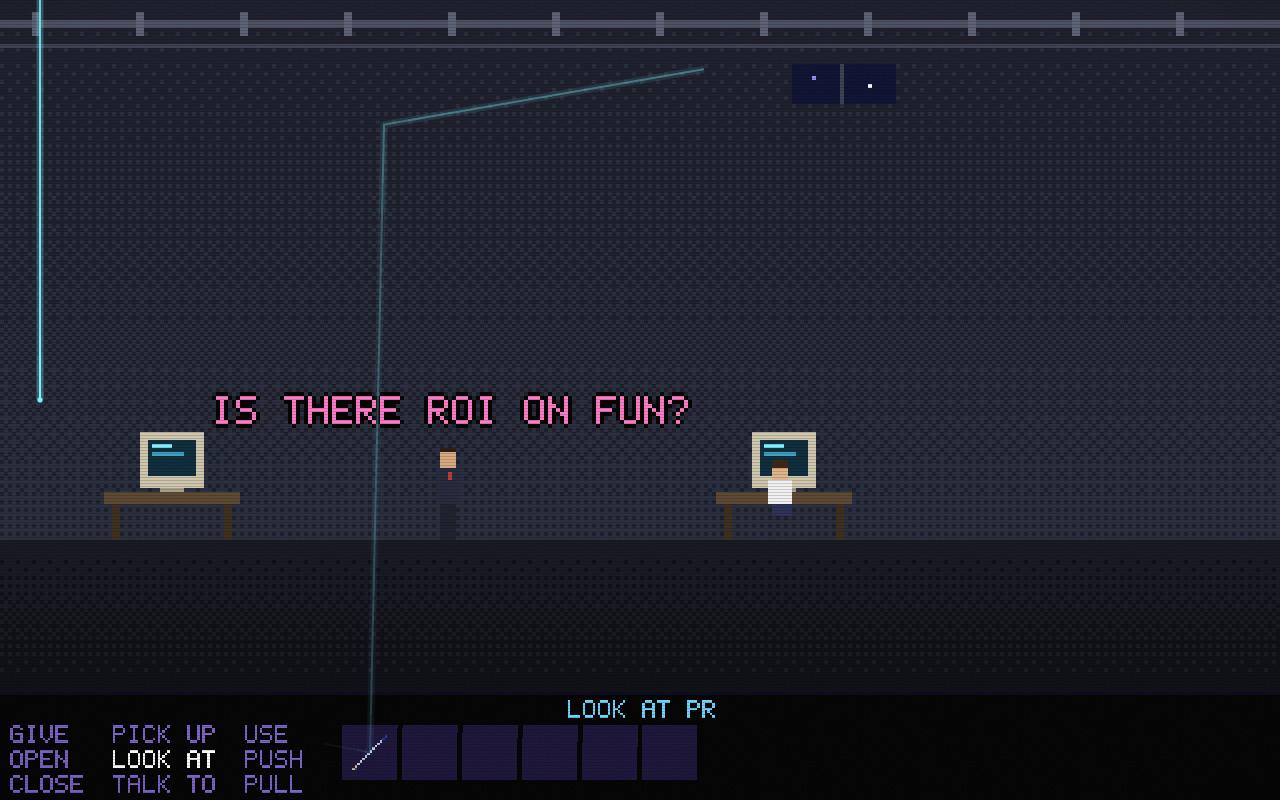
At Lucas I found the basement — literally, Lucas Online lived in the basement — and I found my method. Nobody there believed the internet mattered, which meant nobody was watching, which meant I could build. I registered the official Star Wars social-media accounts weeks after Twitter existed and nearly got fired for it. I pitched a fake $7,000 rhythm game called Star Wars Cantina Hero as an April Fools joke, got Harmonix and the president of LucasArts on board, and watched the head of PR kill it with a question I have spent my whole career answering: “Is there ROI on fun?”
A pixel-art basement office. A man in a suit asks: IS THERE ROI ON FUN? At his desk, Brooks answers: THERE IS.
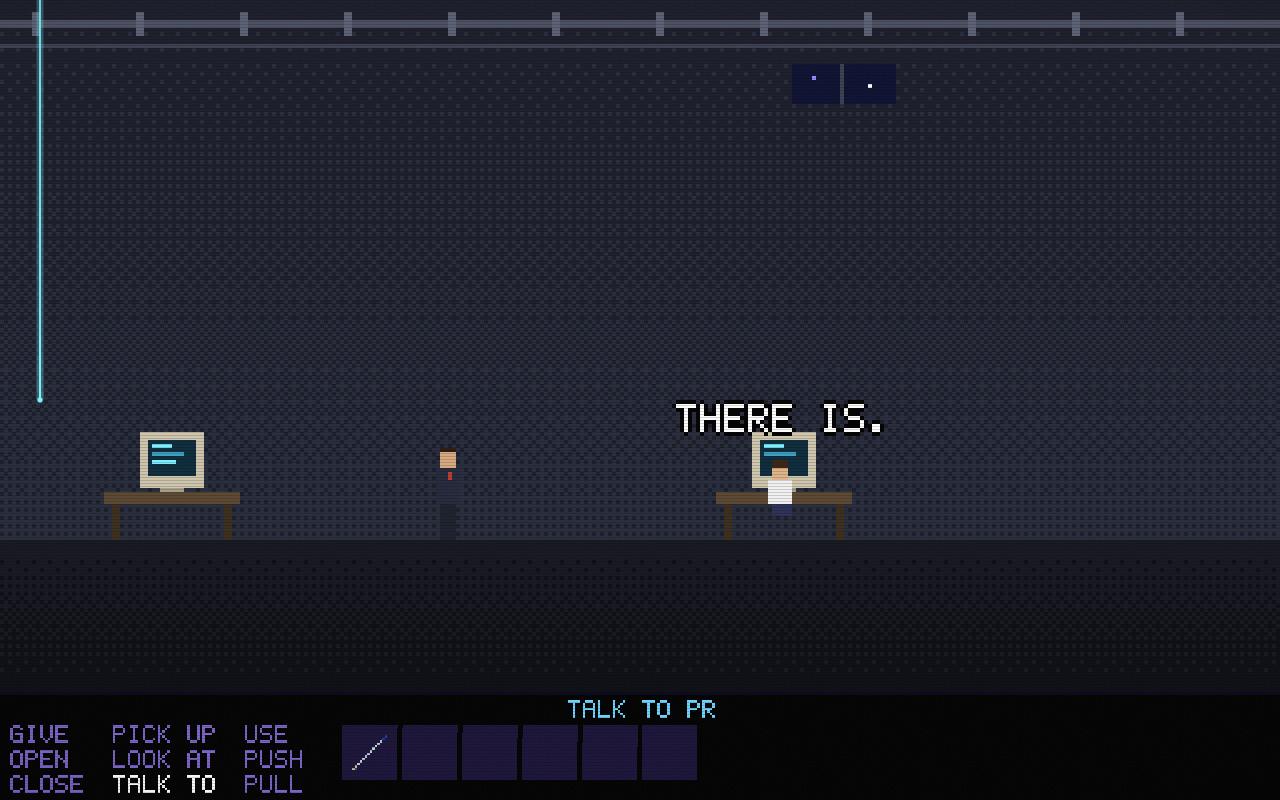
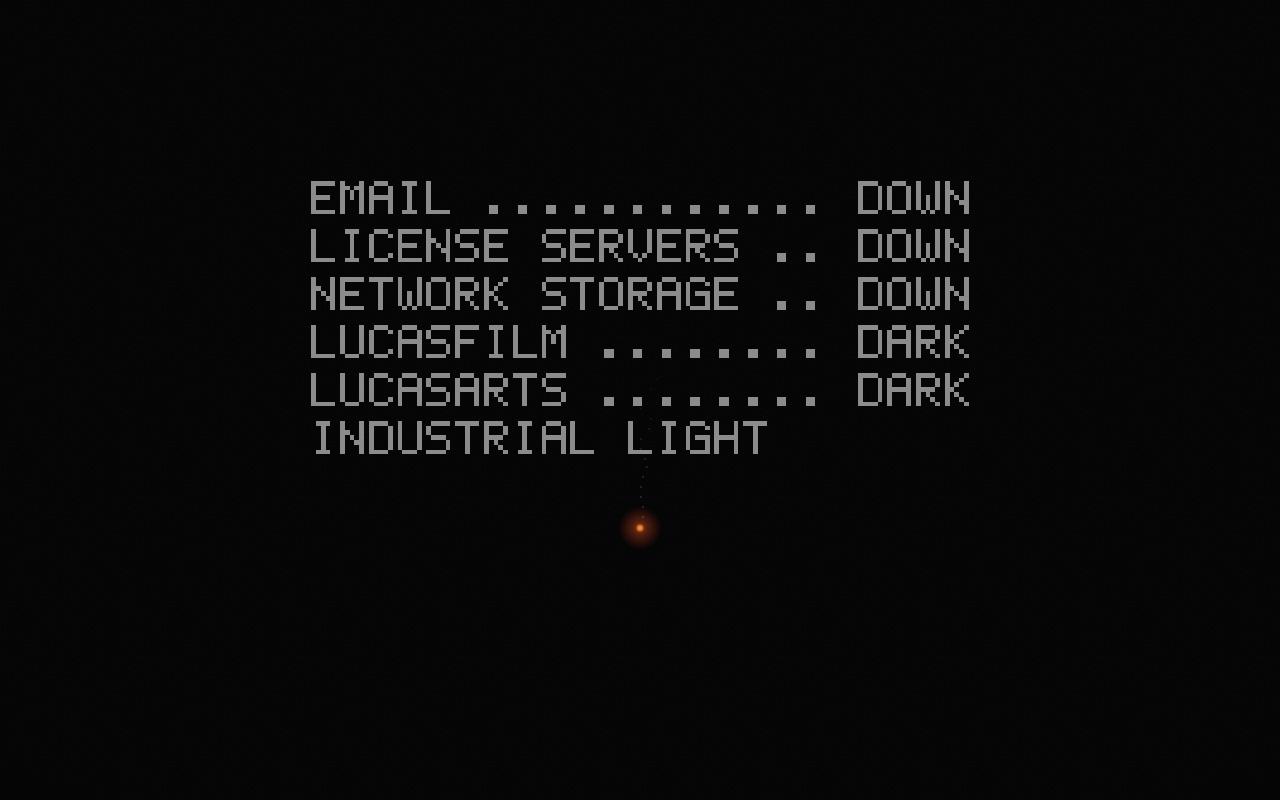
There is. I proved it. For Lego Star Wars III I built what I told everyone was a “marketing site” and was actually a fully instanced Flash MMO — thousands of interactive objects, a dozen players a room. I warned them it needed cloud infrastructure. They were the most risk-averse company I have ever worked for, so they refused, and on launch day nearly three million people showed up and the shared internal network of Lucasfilm, LucasArts, and Industrial Light & Magic went dark — email, licensing servers, everything — while I sat outside with my cigarettes and waited for someone to come get me. We flipped it to the cloud. The campaign swept its awards. My performance review that year was negative, for budget reasons that had nothing to do with me.
The pixels snap into toy bricks, stud by stud. One room of players becomes many rooms, repeated; a counter of players online climbs.

Black screen. A list: email down, license servers down, network storage down, Lucasfilm dark, LucasArts dark, Industrial Light & Magic dark. In the dark, one cigarette ember and a thread of smoke.

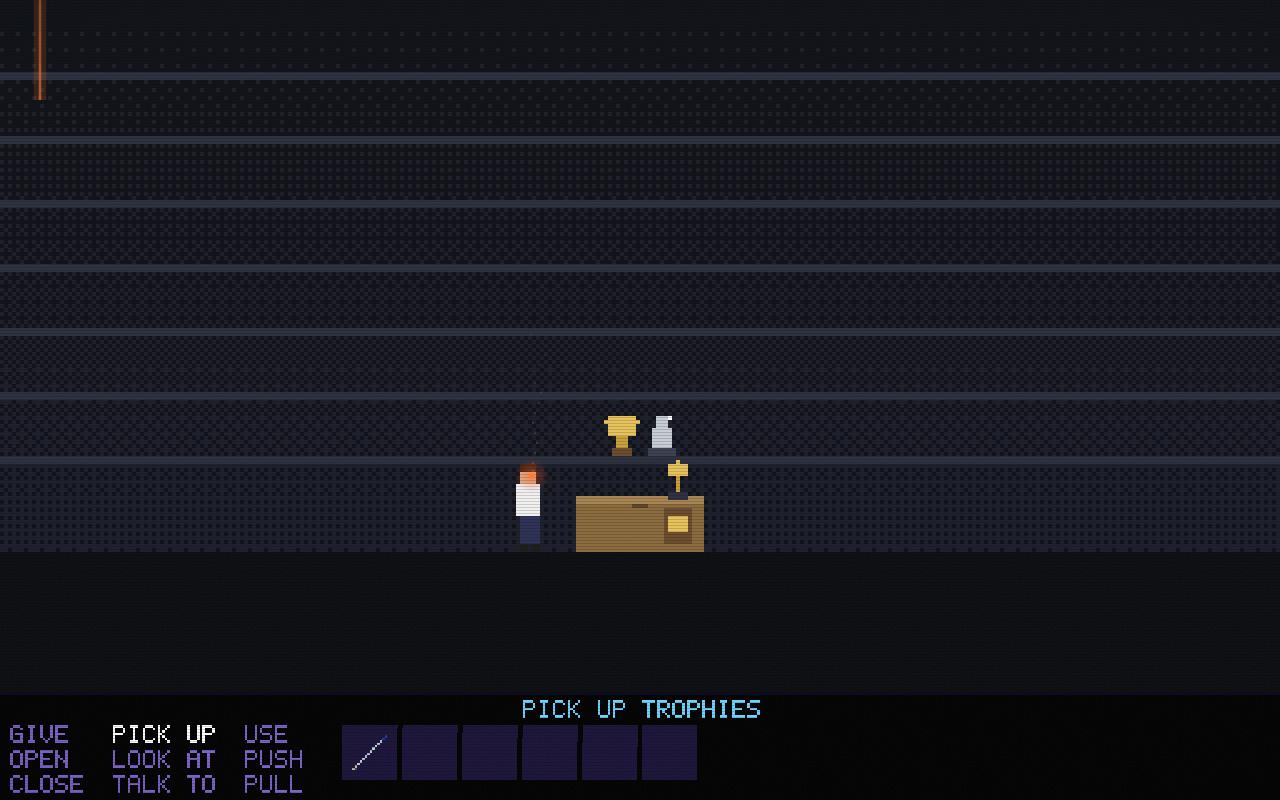
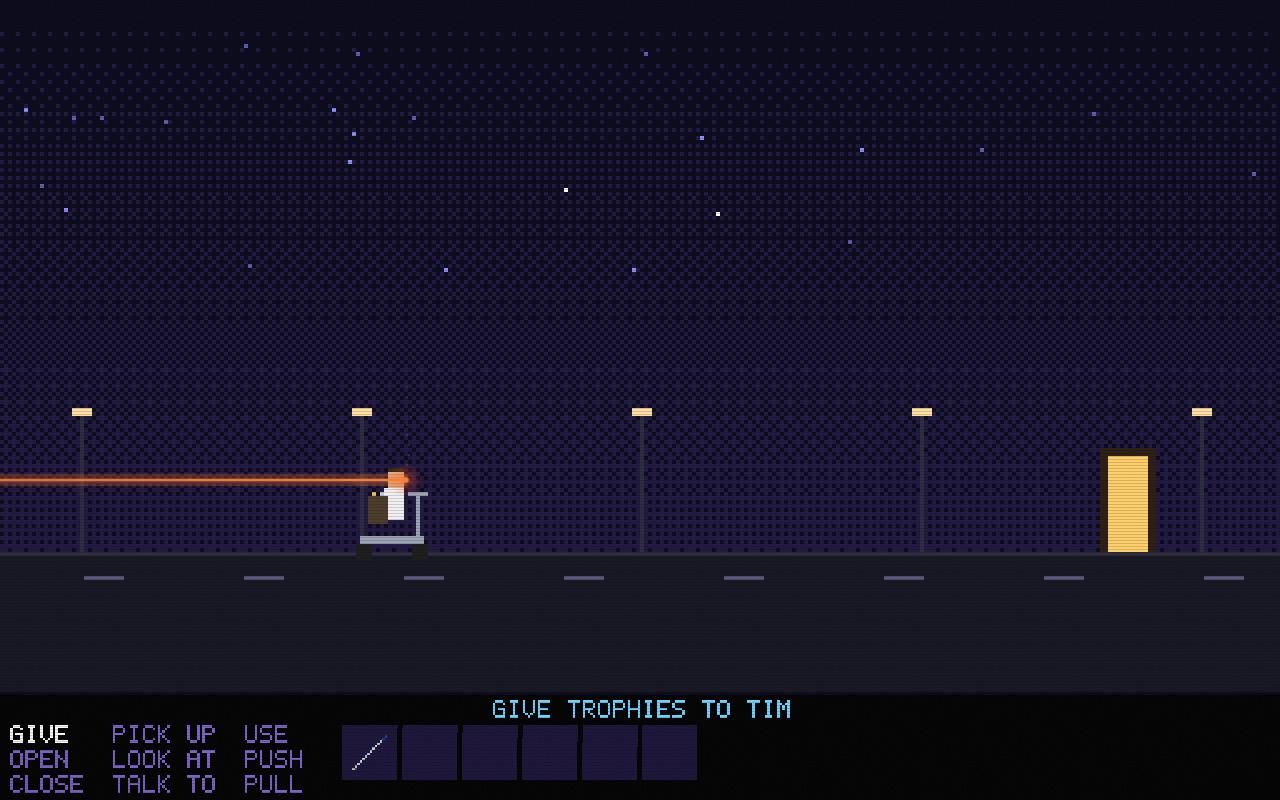
On my last day — which happened, by pure accident of my two weeks’ notice, to be the day the world learned Disney had bought Star Wars — I loaded a bag with the LucasArts trophies I had spent two years rescuing from a garbage box in sub-storage, rode my scooter to Double Fine, and handed Tim Schafer the awards for Day of the Tentacle and Grim Fandango and Full Throttle. His life’s work was not going to a landfill on my watch.
Pixel art: Brooks beside a cardboard box in sub-storage; old trophies rise out of it. Pixel art: Brooks rides a scooter down a night street with a bag of trophies toward a lit door. Verb bar: GIVE TROPHIES TO TIM.
Problem solved. Thing made to work. Move on.
Who Mapped the Moon
I left Star Wars for the only job you leave Star Wars for: vice president of James Cameron’s production company. I hadn’t even interviewed. A friend who’d spent six months winning the position couldn’t wait out Jim’s schedule — the man was at the bottom of the Mariana Trench, which is the most James Cameron excuse ever recorded — so he handed them my name. When the call came I told them where to shove it, because obviously it was a joke. It wasn’t a joke.
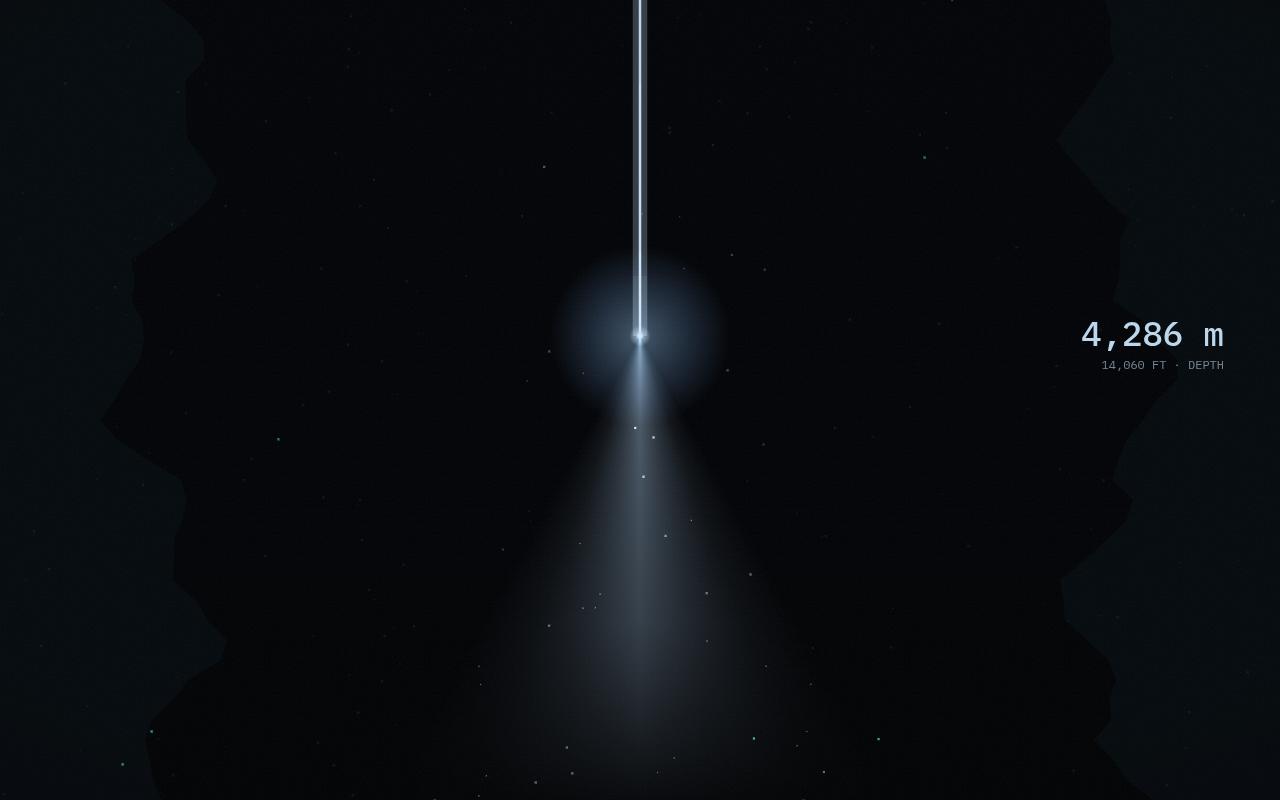
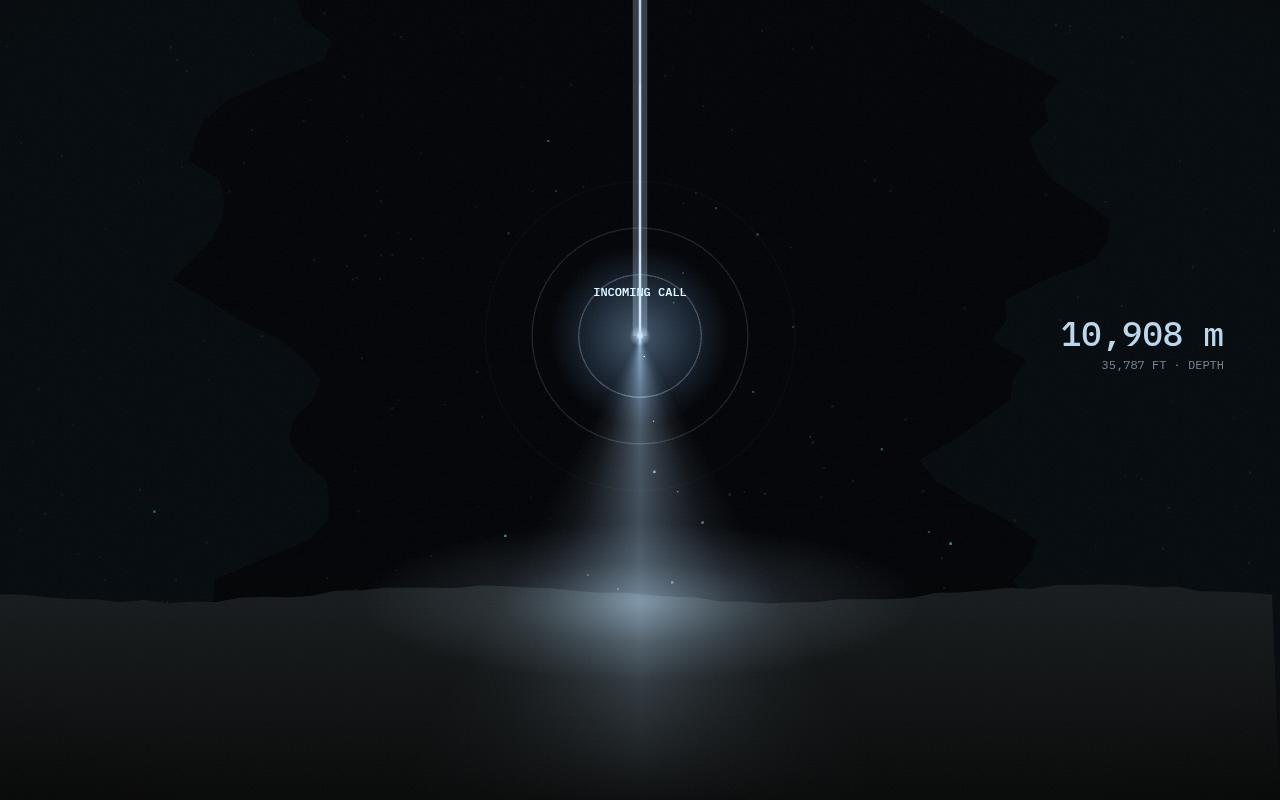
A light sinks through dark water between trench walls; marine snow drifts upward; a depth readout climbs. The light rests on the seafloor at 10,908 metres. Rings pulse around it: INCOMING CALL.
The light breaks the surface into a night sky full of stars. The light rises into the sky and becomes the Moon, shaded from NASA elevation data.


I was among the first fifteen or so people Jim ever hired, and those four years rebuilt my creative process from the studs. My whole life I had argued myself out of things — too hard, don’t know how, why me. Then one day, mapping the game universe for the Avatar sequels, I said we’d need an actual map of Pandora and I had no idea how you map a fictional moon. Jim didn’t even look up. “Who mapped our Moon? JPL? Find them. Call them.”
Green contour lines of the Moon’s real elevation sweep across its face. Who mapped our Moon? JPL? Find them. Call them.

Oh. I guess I could do that.
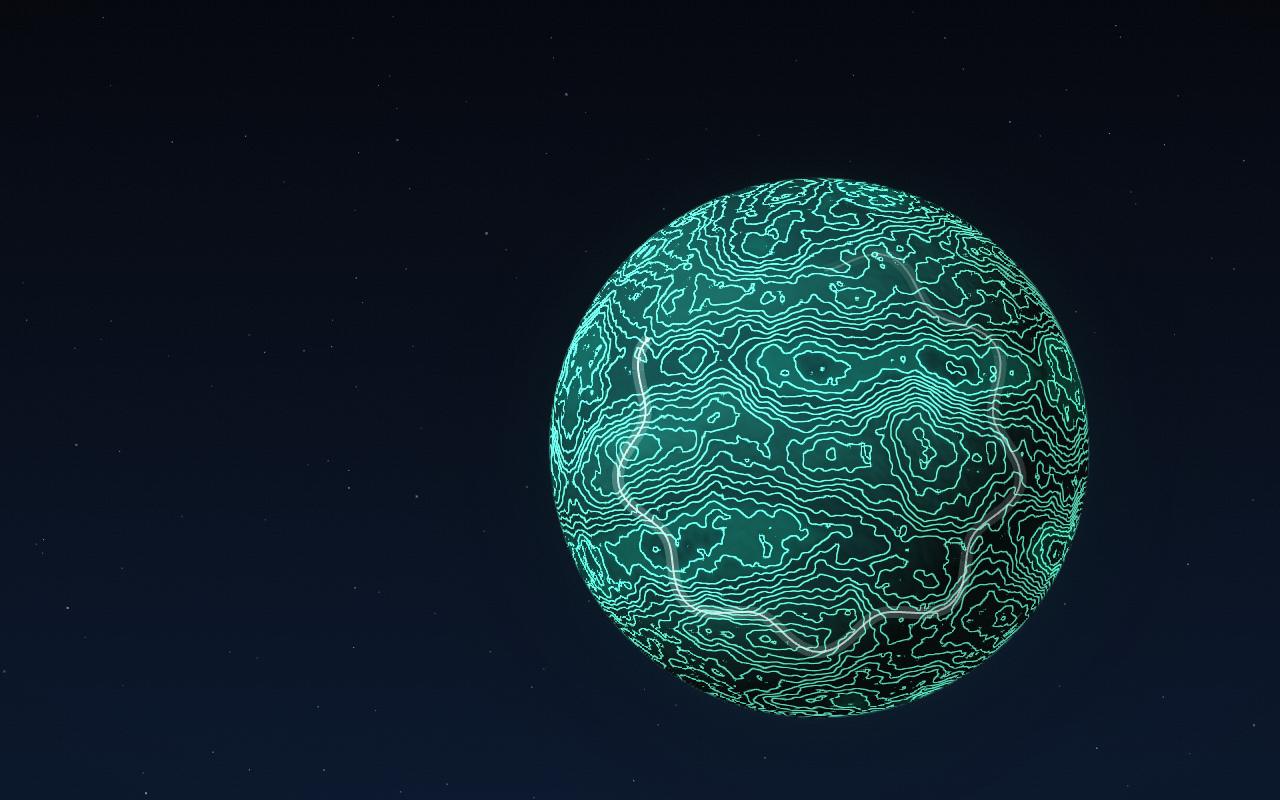
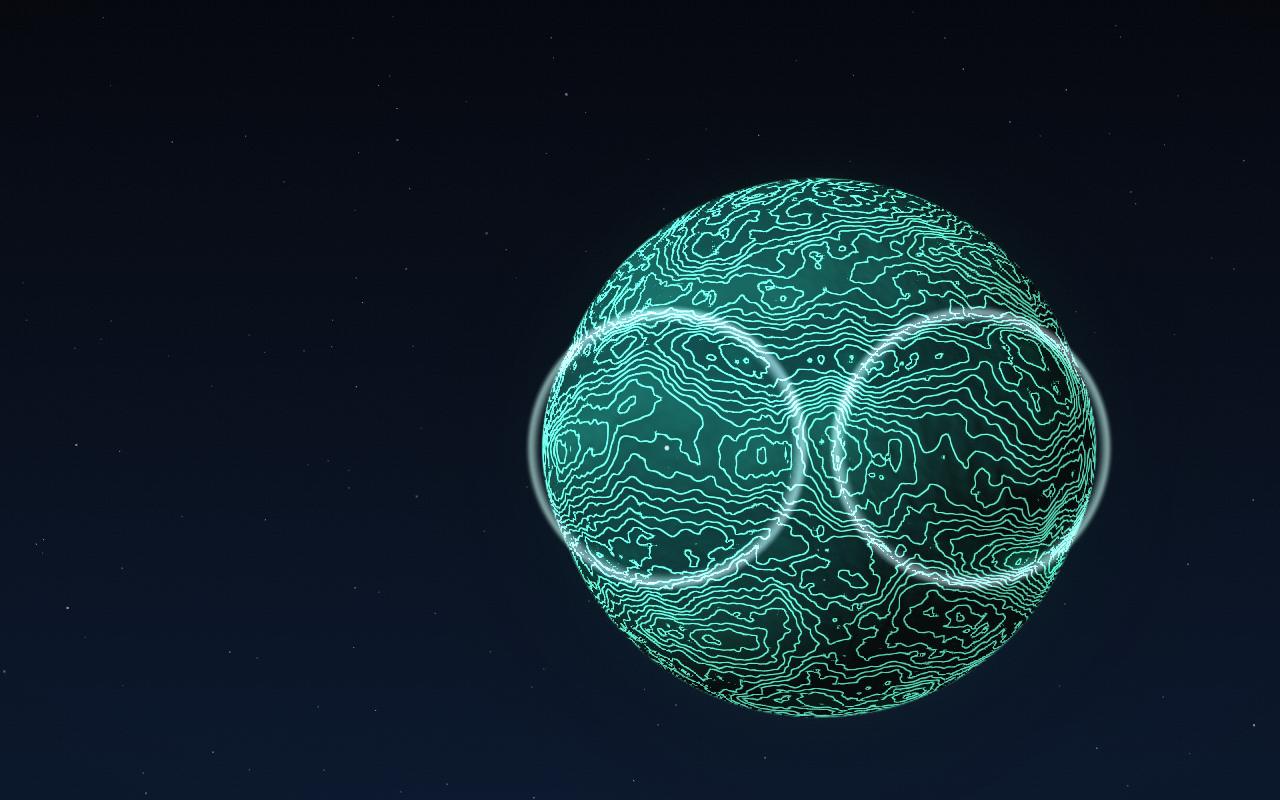
The contours morph into a fictional moon, teal and glowing.
That sentence is worth more than every management book ever printed. Almost nothing you will ever build is truly novel; it is a reconfiguration of things already built by people who love the thing they built and are usually delighted to talk about it. The scientists who mapped the Moon mapped Pandora for us, happily, because nerds want to do the nerd thing. I flew to Florida with Jon Landau to look at Magic Leap’s billion-dollar glasses; in the elevator afterward he said say nothing, and in the car he said “Well, that’s never showing up, is it?” — and it never really did. I learned to see through spectacle from the men who invented spectacle. I learned you could tell Jim no. I learned that the wobble in a camera operator’s hands is the difference between fake and real, and that the imperfection is the craft.
A pair of glasses passes in front of the moon, refracting it. The two lenses open into a headset’s view: the moon in each eye, black around them.
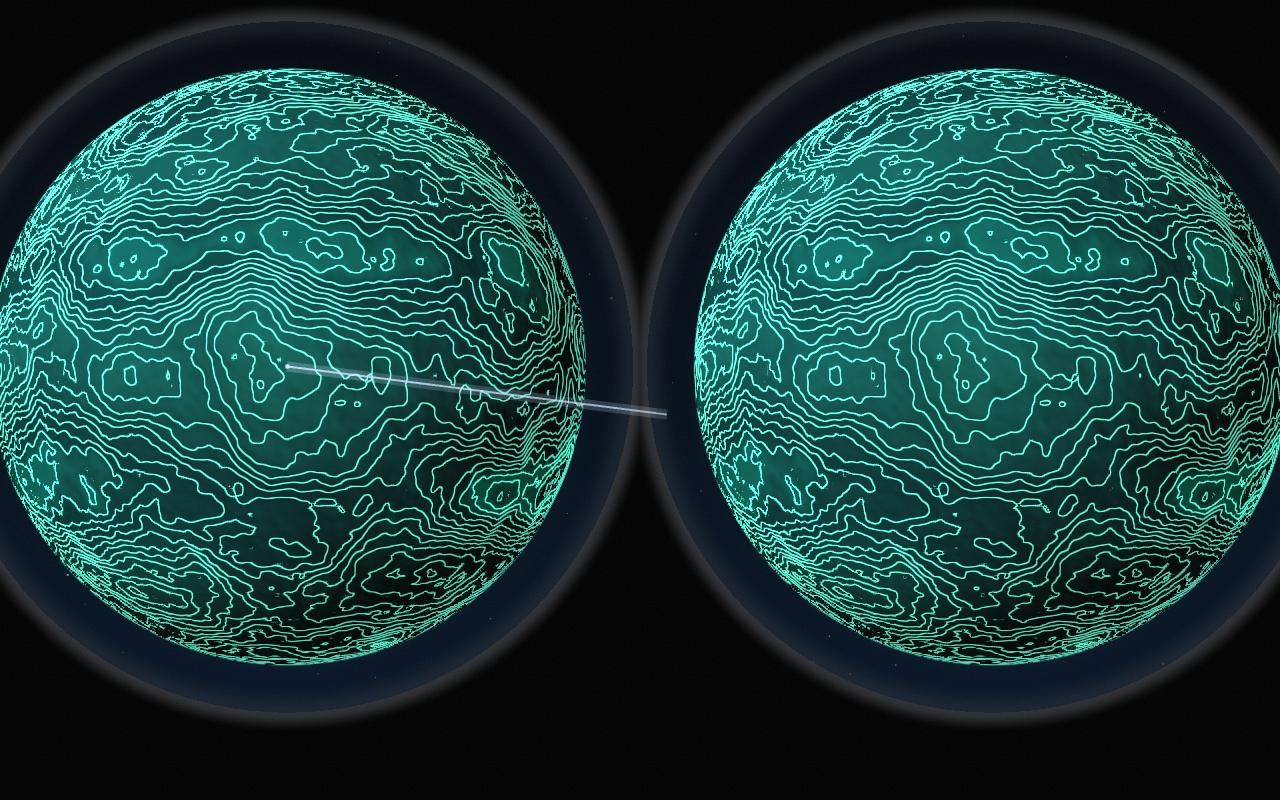
And when I had absorbed what the place had to teach, the thread pulled again.
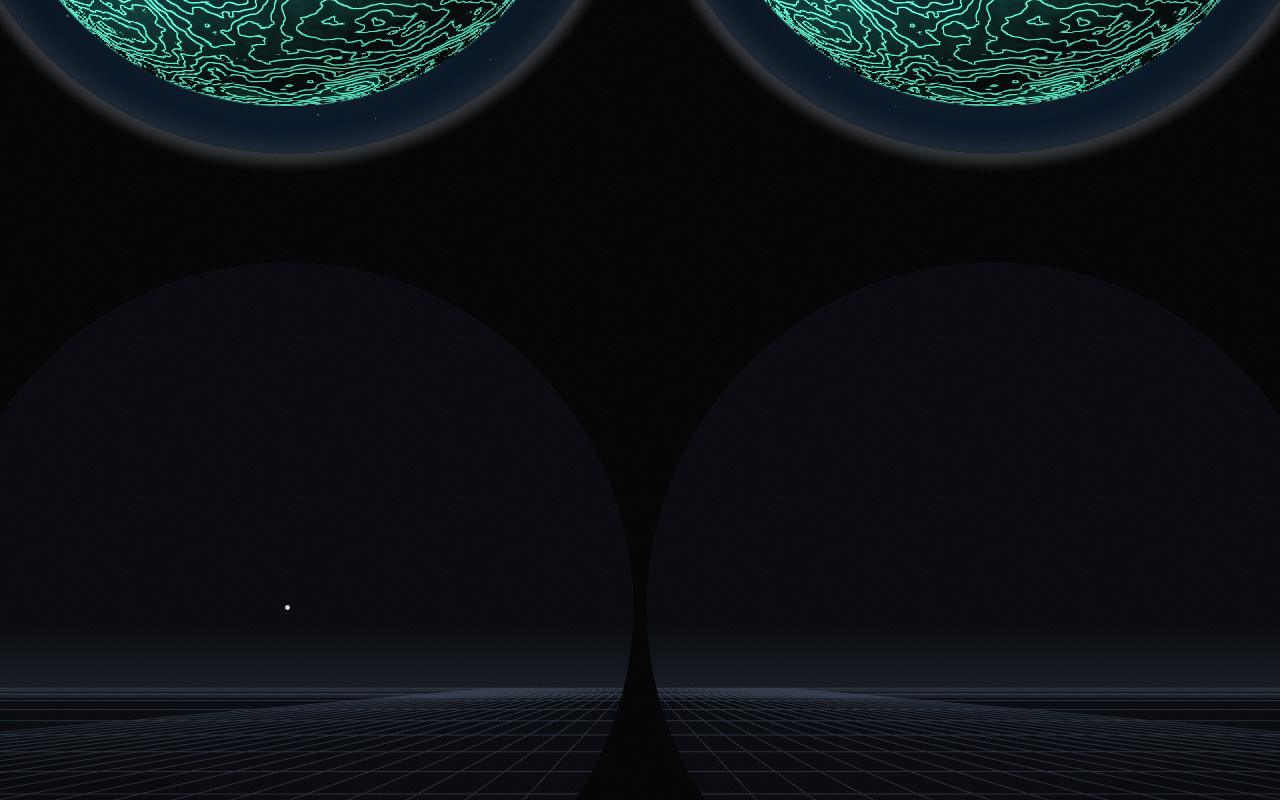
Inside a headset: two round lens views of a wireframe horizon. The view widens to fill the screen. A gauge reads the horizontal field of view climbing toward 210 degrees.

Ruin Someone's Day
Starbreeze handed me the most expensive sandbox of my life: head of U.S. operations, global director of VR, the StarVR headset with its impossible 210-degree field of view, the IMAX VR centers, the Payday licensing machine. I ran it like a closer — never missed a deadline, never missed a budget. When Universal turned down our six-month plan for The Mummy and came crawling back with eight weeks to release, we shipped it anyway, into the ground floor of 30 Rockefeller Plaza, with Tom Cruise leaning over our shoulders. When Tim Schafer couldn’t close the funding on Psychonauts 2, I finally got to repay a fifteen-year-old kindness: I helped make Starbreeze’s eight-million-dollar deal happen, and my name is in the thank-yous of a game I love. When Starbreeze’s Nintendo Switch moment came, I gave Payday a hacker girl with Joy-Con-colored gloves. When Ethan and Hila Klein were being sued into oblivion over fair use, we built them into the game and sent them every dollar.
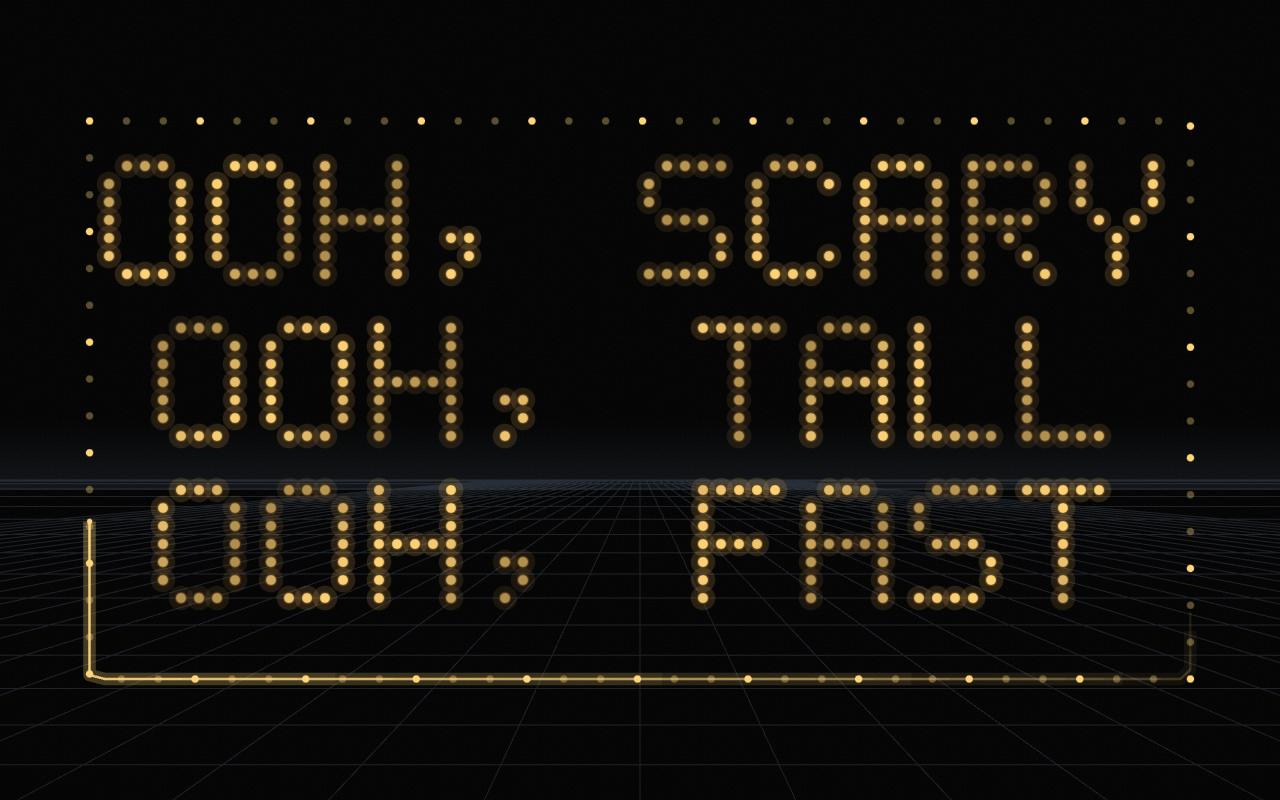
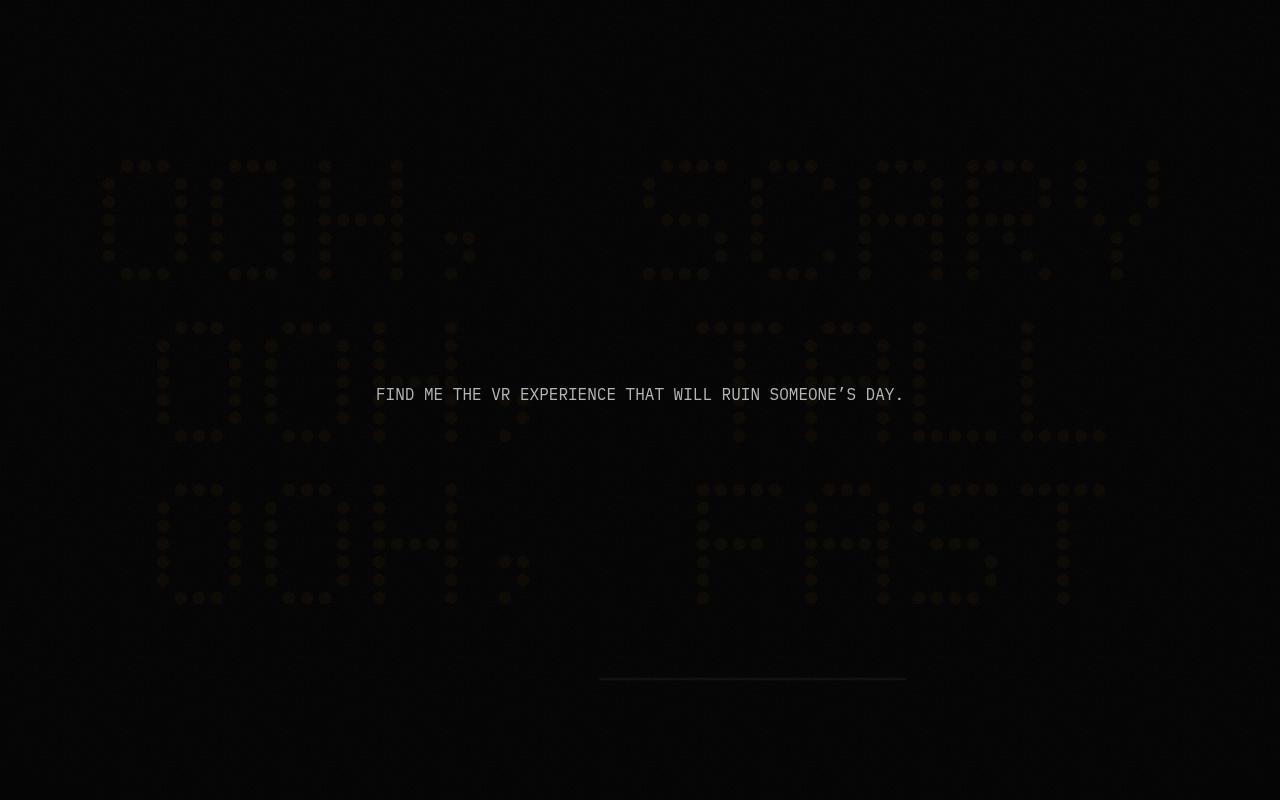
But the problem — the real one, the one everybody had agreed couldn’t be solved — was VR itself. The entire medium had been sold on what I called carnival emotions: ooh, scary; ooh, tall; ooh, fast. Cheap reflexes dressed up as the future. I stood on keynote stages saying so. Then I put my team on a brief that made people visibly uncomfortable: find me the VR experience that will ruin someone’s day.
A carnival marquee of light bulbs: OOH, SCARY. OOH, TALL. OOH, FAST. The bulbs are off. In the dark: FIND ME THE VR EXPERIENCE THAT WILL RUIN SOMEONE’S DAY.
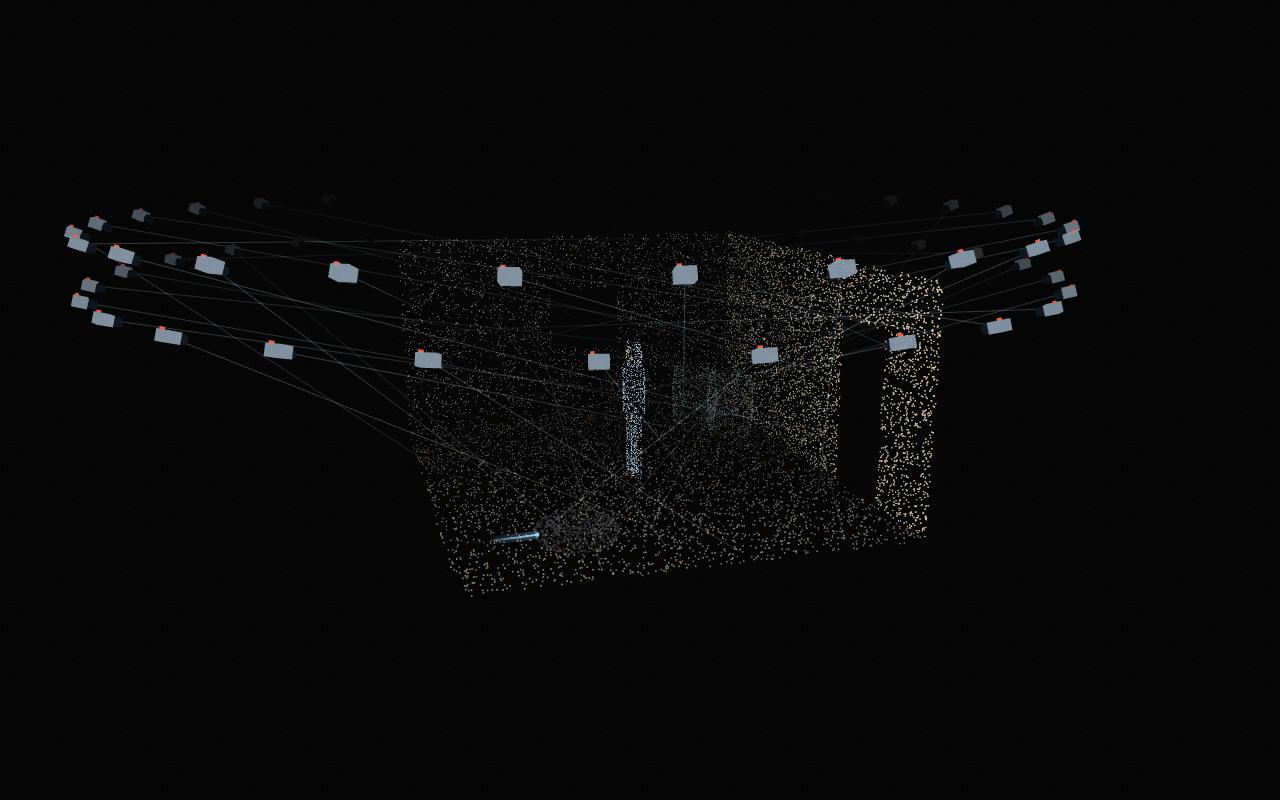
We almost made it with Harlan Ellison, and his death before we could close remains one of the griefs of my career. Instead, Navid and Vassiliki Khonsari of iNK Stories brought us a diorama of a Syrian barrel bombing, and I asked the question the thread always asks: what if we stopped watching and went through it? Full scale. One to one. Touch a barrel, there’s a barrel; touch the wall, the cracks in the stucco match the cracks in your headset. Fifty-six tracking cameras. Heat, dust, scent — there is a synthetic oil that smells like burnt bodies, and I know that now, and I wish I didn’t. And because headphones would have broken the spell, DTS’s engineers built an open-air positional sound field — dozens of speakers, hundreds of channels, audio placed behind walls that weren’t there — inventions they went on to patent, born on the platform we handed them. That was the deal I loved most: give brilliant people an impossible stage and get out of the way.
Fifty-six tracking cameras on a ring, each with a small red light that stays on once its ray has fired; the rays resolve a point-cloud courtyard with cracked stucco walls, barrels, a tire, and one participant in a headset.
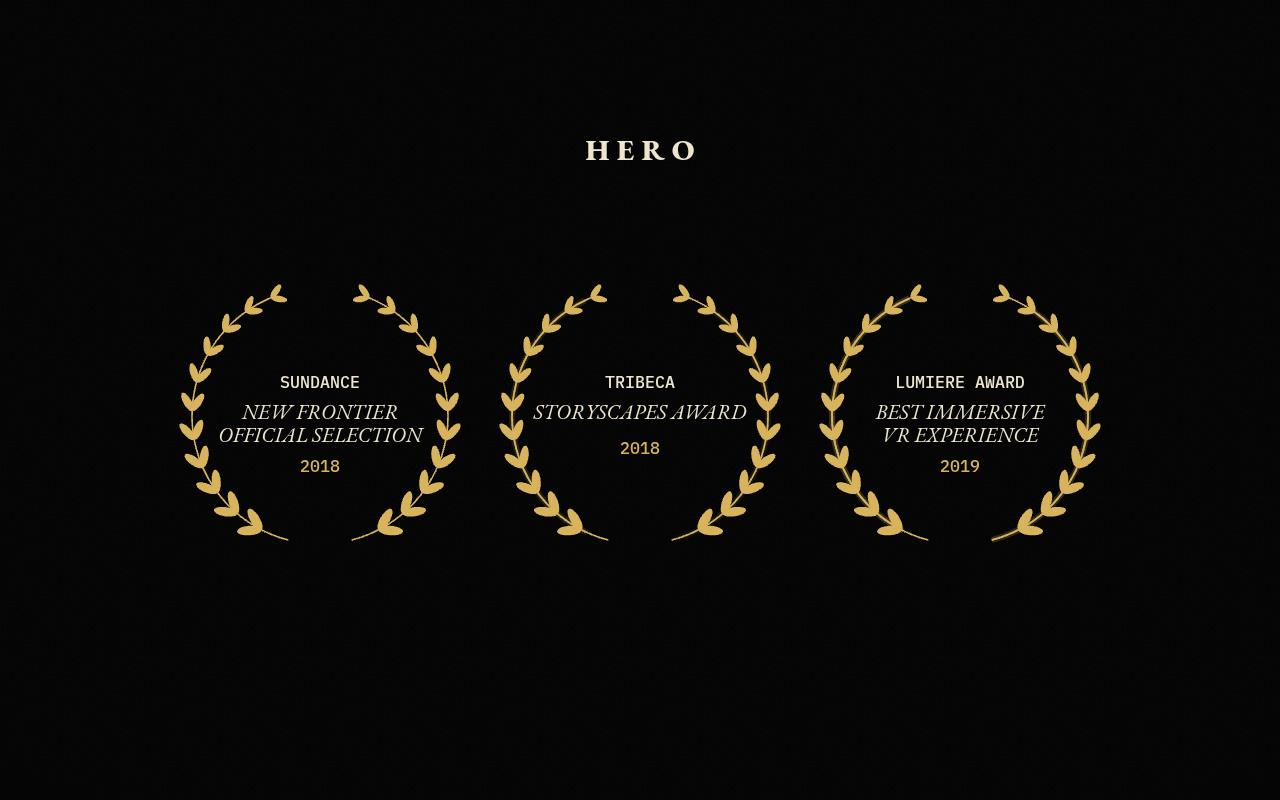
The director of Sundance took the headset off, told us it was too much, and shut us down two hours before opening night. The second person through — who turned out to have won Sundance the year before for her Syria documentary — came out sobbing, called it the most important thing she had ever experienced, and marched straight to the festival’s founder. We opened that night. For a week I watched hardened people, famous people, crew people, come out of that rig weeping, and I cried with them, every few minutes, until I had nothing left. HERO took the Tribeca Storyscapes Award — I put twenty-three thousand dollars of shipping on my own credit card to get my team there, because they had earned Tribeca and Starbreeze had not earned the right to take it from them — and then the Lumiere for Best Immersive VR Experience, handed out at a ceremony where Tom Cruise turned up and recognized me as “the Mummy guy.” Our approach became the template for the festival VR that came after us. I’m allowed to be proud of that.
Three gold laurels for HERO: Sundance New Frontier official selection, 2018. Tribeca Storyscapes Award, 2018. Lumiere Award, best immersive VR experience, 2019.
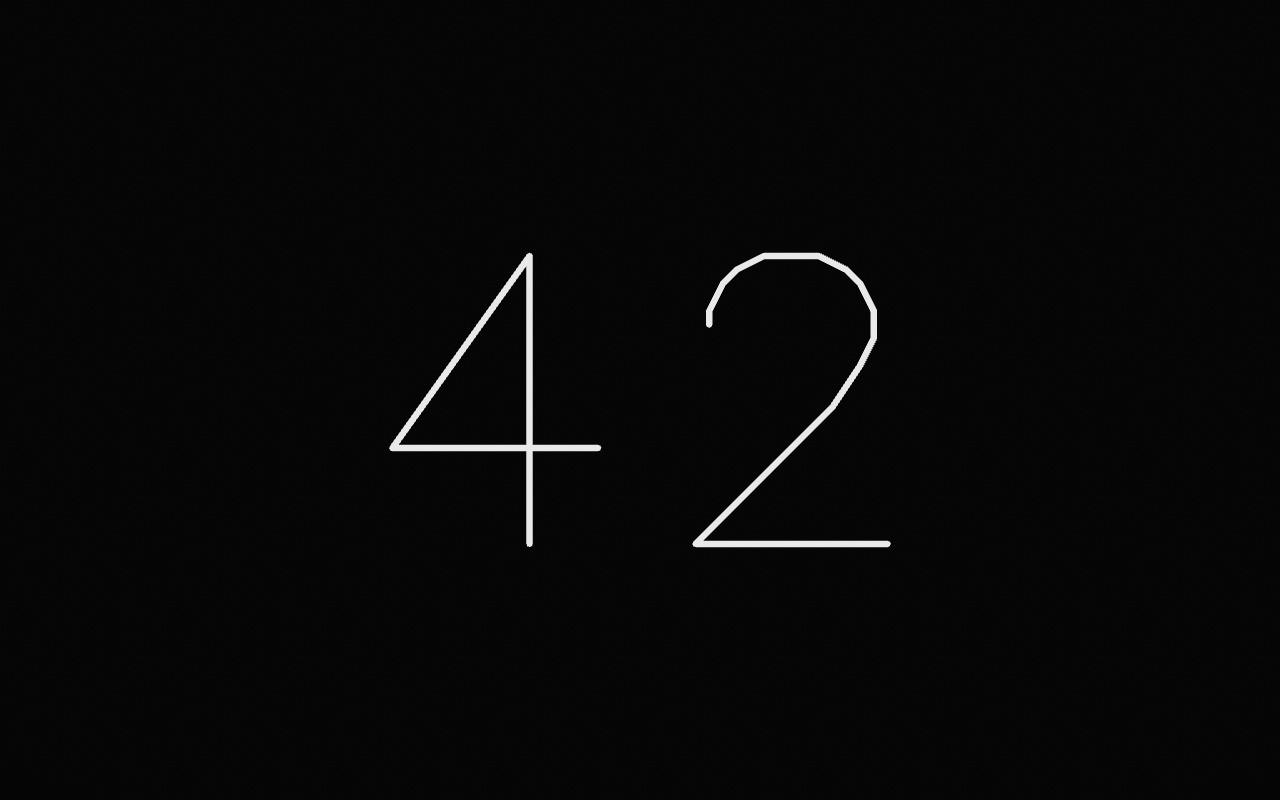
And then I played Starbreeze’s make-or-break Walking Dead game, told the CEO at GDC it would land at a 42 on Metacritic and destroy the company, and said I wouldn’t be part of it. It landed within a point. They pulled it from Steam. I was already gone.
The pen writes a large 42 on black.
Solve. Ship. Move on — even when moving on costs you everything.
The thread arcs across the black and comes apart behind itself: strands peel away, sag, turn grey and shed dust, leaving one grey hairline headed down the right side.
The Crash
It cost me everything.
The independent years read like a highlight reel right up until they read like a police report of the pandemic economy. A television pilot, Outsourced, built with a founding member of Arcade Fire and a cast including Chris Kattan and Doug Stanhope, in which every asset was genuinely commissioned on Fiverr — the joke was the production method. A music startup, ViRvii, where I finally built the idea I’d been carrying for a decade: every song’s thousands of lines of metadata used as a procedural seed, growing a unique object, a unique world, for every piece of music on Earth — discovery through shape instead of algorithm. Oculus signed. Kendrick Lamar’s team loved it. Live Nation was coming aboard. Our first check was due the week the world closed.
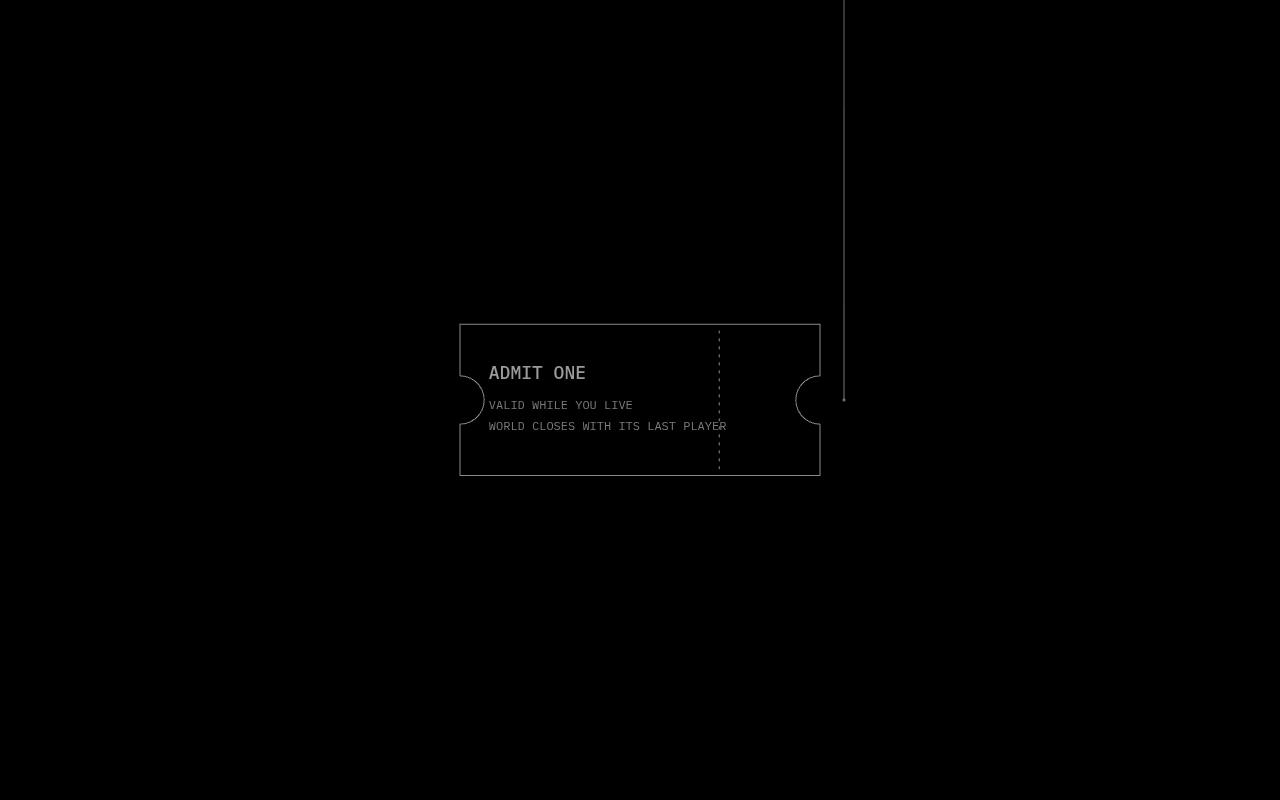
A second company — a perma-death server system where cryptographic tickets died when you died, and when the last player fell, the world became unreachable forever — raised five million dollars on the strength of an idea and my refusal to run it as a token grift. When the crash came and every investor demanded a coin and a six-month exit, I built the technology out, shut the company down clean, and walked away from paper wealth I’d joked about with my brother while borrowing pizza money.
A ticket outline in grey: ADMIT ONE. VALID WHILE YOU LIVE. WORLD CLOSES WITH ITS LAST PLAYER. It fades.
I ate the costs personally. Rent, insurance, a family, no income, a hundred-some thousand dollars of debt that bought nothing you could sell. We moved north to the cheap side of the river. I declared bankruptcy over the phone, called by number, three questions, done — one filing among thousands that season. I will tell anyone who asks: it is a tool, not a shame. It paused the bleeding. It let me stand up.
And standing up, broke, in a rented house in a pandemic, I did the only thing the thread knows how to do. I found a problem.
The Collective
The problem was posted on Reddit the first week of lockdown: someone wished a group would read Anti-Oedipus together — Deleuze and Guattari’s famously unreadable machine of a book. I had the two skills the moment required: I knew how to build a Discord server, and I did not know how to leave a hard thing alone.
The grey line turns green and branches into a network of hundreds of connected points. The network fills the screen: more than 4,500 points, labelled with the collective’s readings, podcast, French lessons, film nights, journal, antioedip.us, essays, Rhizome Productions, and a card game with Dexter.
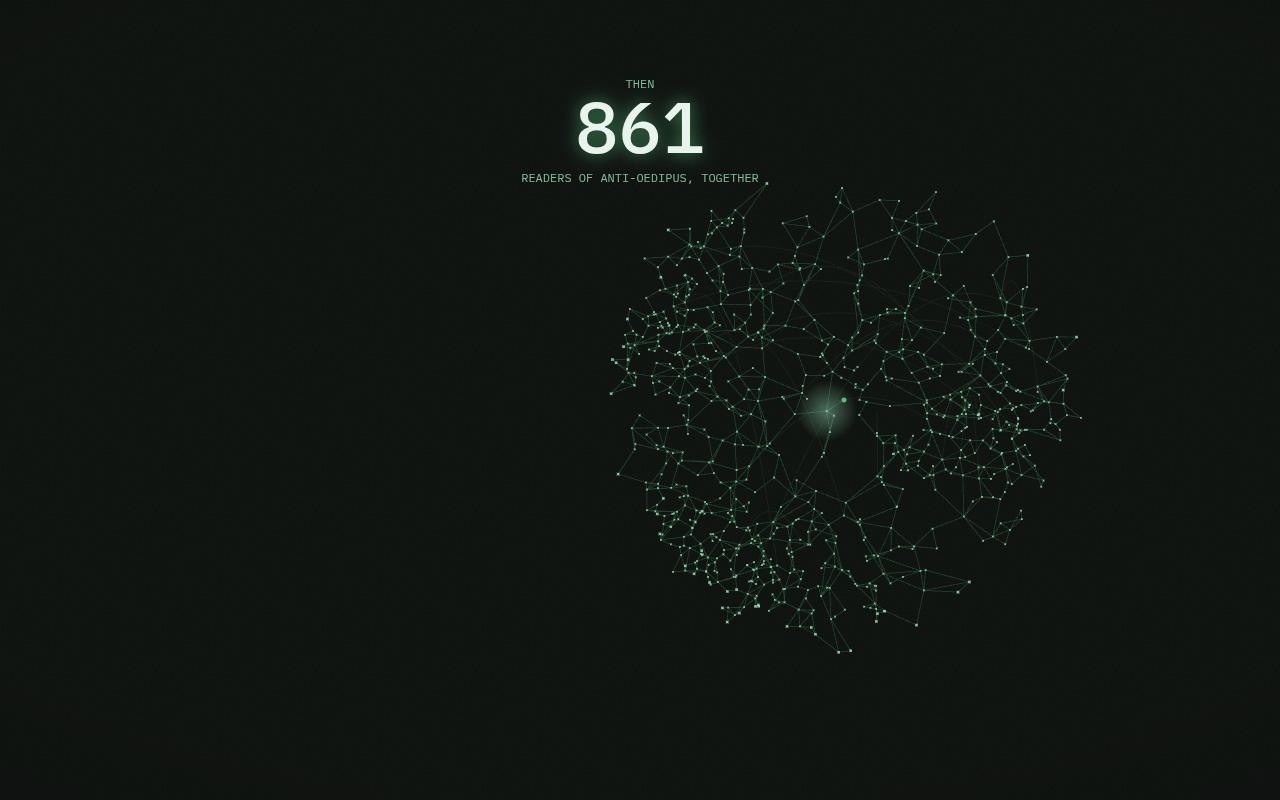
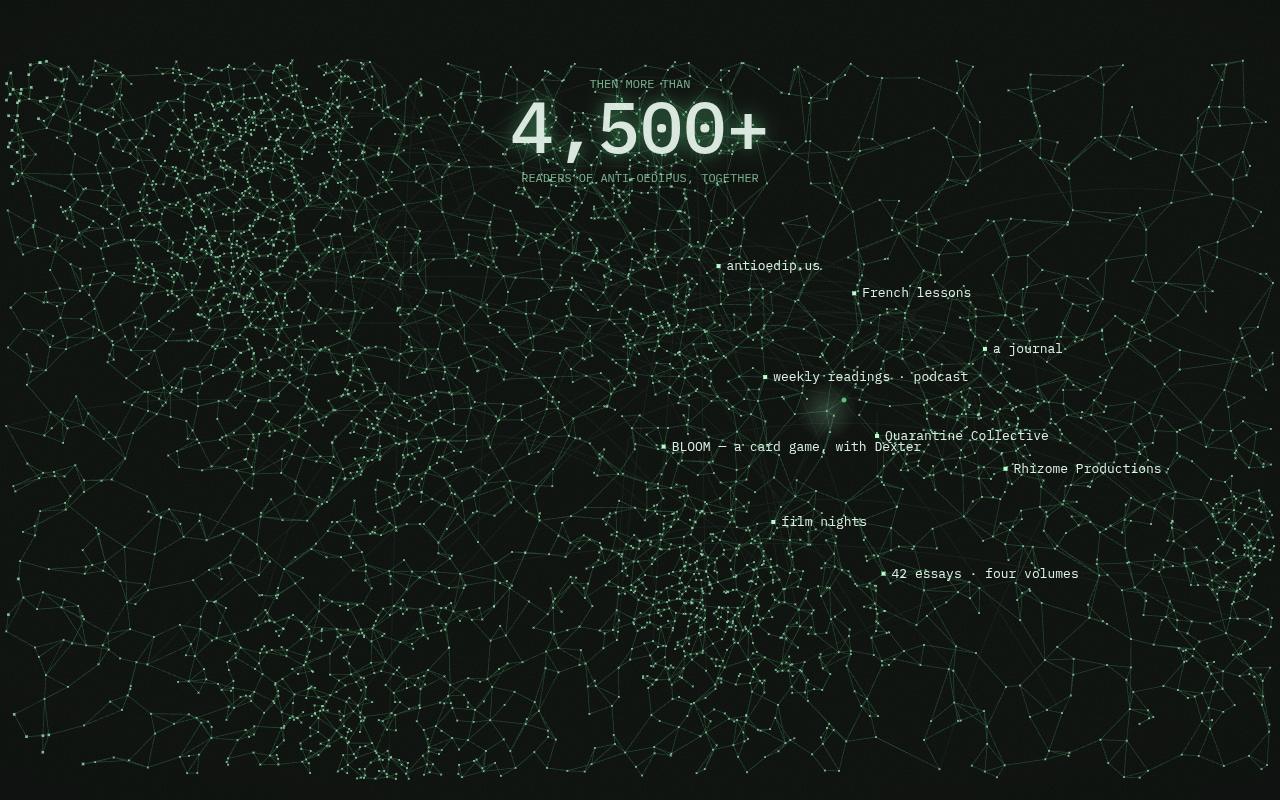
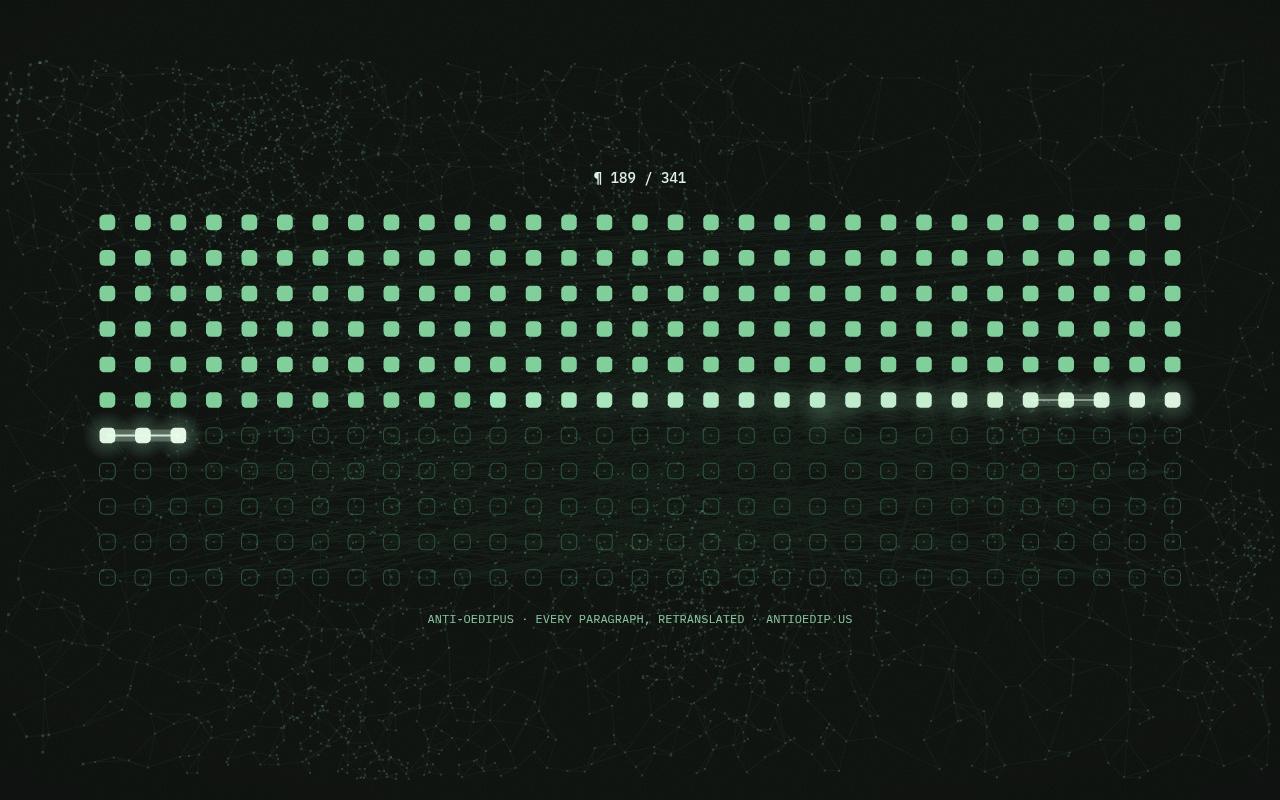
Three hundred people showed up in a week. Then a thousand. Then more than four and a half thousand. The Quarantine Collective became the strangest and most durable thing I have ever built: weekly close readings released as a podcast, French lessons, film nights, a journal, friendships between people who share nothing but difficulty. When the existing English translation kept failing us, I did the obvious unreasonable thing and retranslated the book — all of it, every one of its 341 paragraphs, published free at antioedip.us with my reasoning shown. I became, by accident, a philosophy video essayist: essays on the language we use to lie to ourselves about AI, on sortition and democracy, on the Stoics and time, on Orwell, on Žižek — forty-two of them now bound into print volumes carrying the same design identity as this book. Everything I learned in twenty years of studios — the editing certification from my twenties, the media training from the worst year of my life, the production discipline from Cameron — turned out to be the toolkit for this.
The first 341 points line up in a grid, one for each paragraph of Anti-Oedipus, lighting up as each is retranslated.
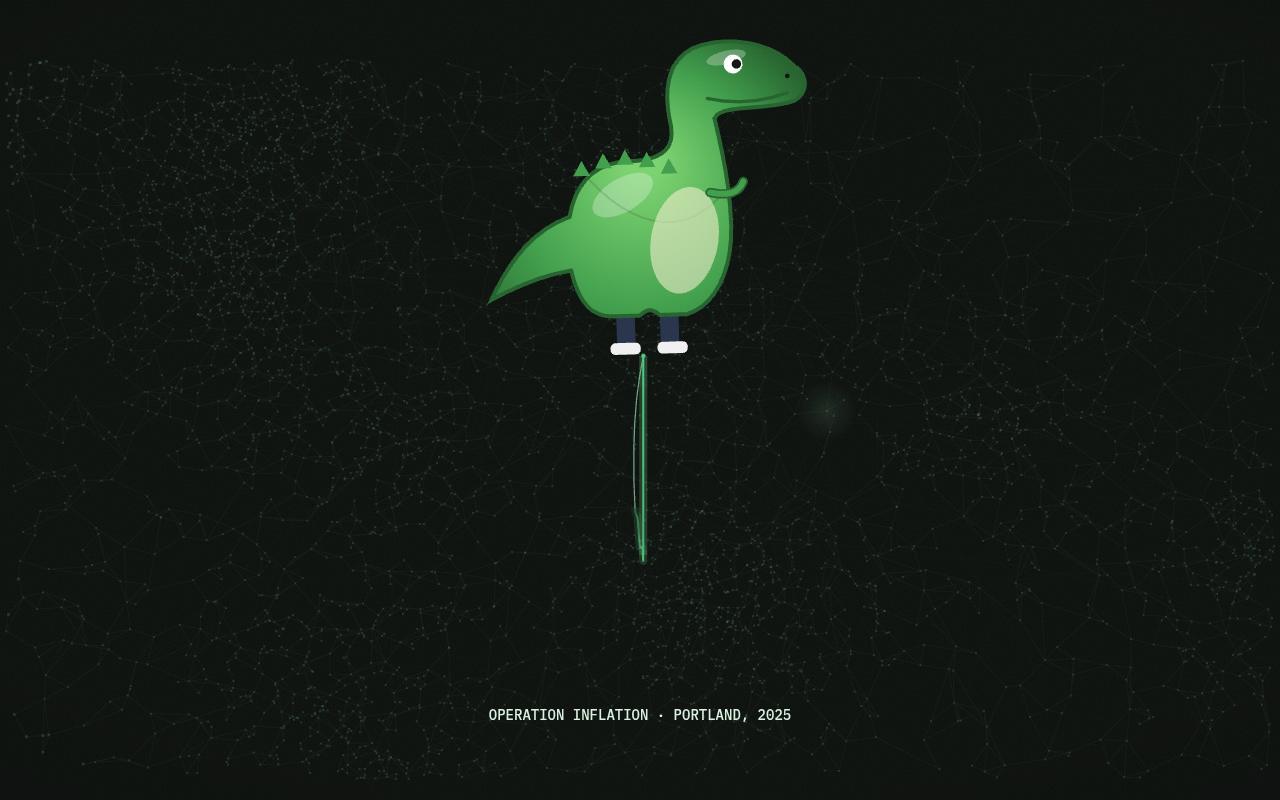
Rhizome Productions, my VFX studio across the river from Portland, keeps my hands in film. My son Dexter is homeschooled at my desk; we built a card game together, a real one, with rules and heat systems and a production plan, because the best way to teach a child that the world is buildable is to build some of it with him. And in the fall of 2025, when federal agents and protesters were squaring off in Portland and the country was being told a story about violent mobs, Jordy Liebeck and I asked the thread’s question one more time: what breaks a false story? The answer, it turns out, is a six-foot inflatable dinosaur. Operation Inflation — absurdity as de-escalation, ridicule as body armor — went from our corner of Portland to cities across the country, and I found myself back on the national news for the best possible reason: nobody shoots at a scene that looks that silly. I learned about Kent State as a boy. I have spent my whole life trying to keep crowds and guns apart. This time I used balloons.
One point inflates into a six-foot inflatable dinosaur costume, a person’s jeans and sneakers showing underneath. The dinosaur floats upward on the thread. OPERATION INFLATION · PORTLAND, 2025.
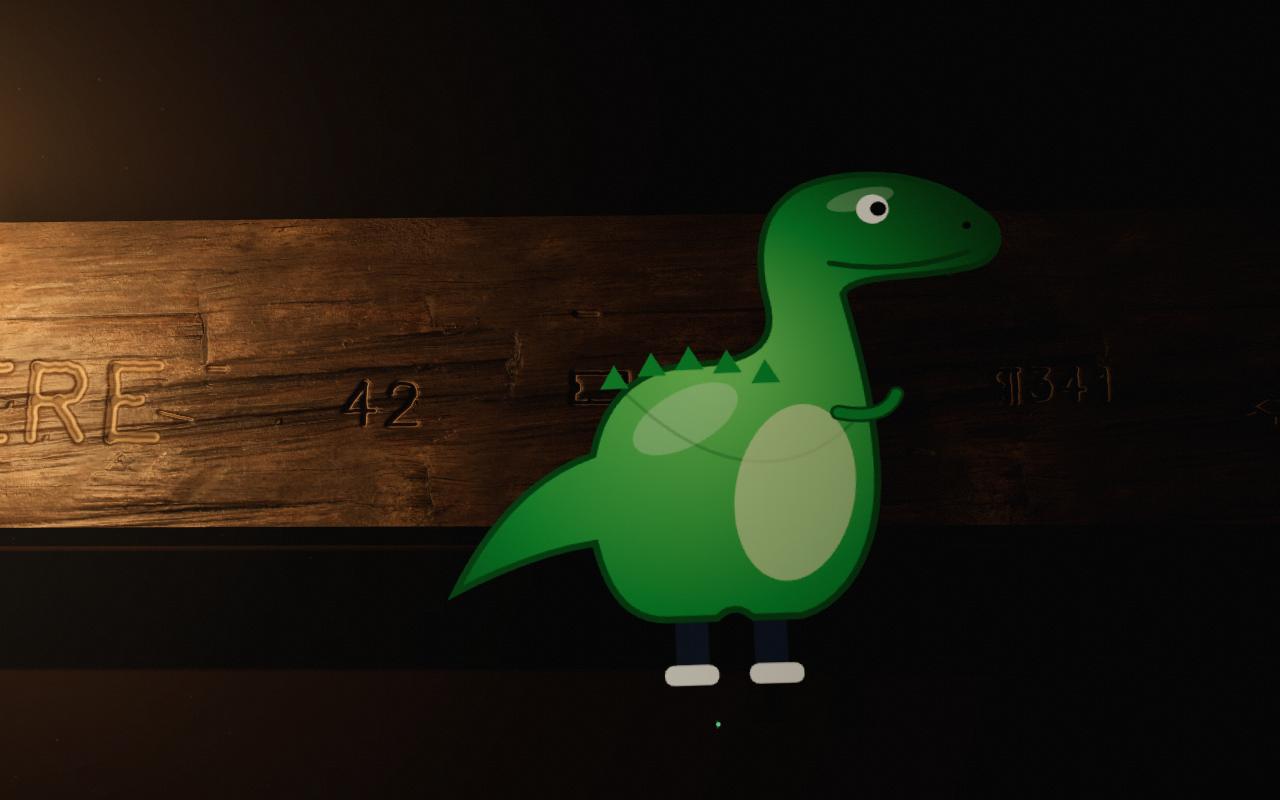
Back in the room with the beam: the dinosaur floats up and bumps against the ceiling beside the carvings. The whole beam: BROOKS IS HERE, with a small inked mark from every act carved along it, and the dinosaur at the end.
The Thread, Held Up to the Light
So no — not a third act. Count them honestly and you get six, or ten, or one, depending on where you cut. A boy falsely accused who answered with a book and a film. A dropout who snuck into the basement of Star Wars and broke the internet with fun. A lieutenant to James Cameron who learned to call the people who mapped the Moon. A VR director who set out to ruin your day and made juries weep at three festivals. A founder who chose bankruptcy over a grift. A philosopher with a Discord server, a translator without a degree, a father with a card game, a man handing a stranger a dinosaur costume outside a federal building.
There was a question my colleagues and I once spent months on, in a room at Lucasfilm where they’d forgotten to give us work: if you could give a child one trait, just one, what would it be? We didn’t even argue. Curiosity. Everything else — love, courage, craft — grows from it, because curiosity is the only virtue you can practice.
That’s all the thread has ever been. Curiosity, pointed at whatever is broken and nearest, with a deadline. Solve the problem. Make it work. Move on.
There is always another problem. Thank God.
Camas, Washington — 2026